

banner-why-daymark.jpg
Daymark IT Insights

Enterprise IT, cloud, security, and AI guidance from Daymark’s technology experts.

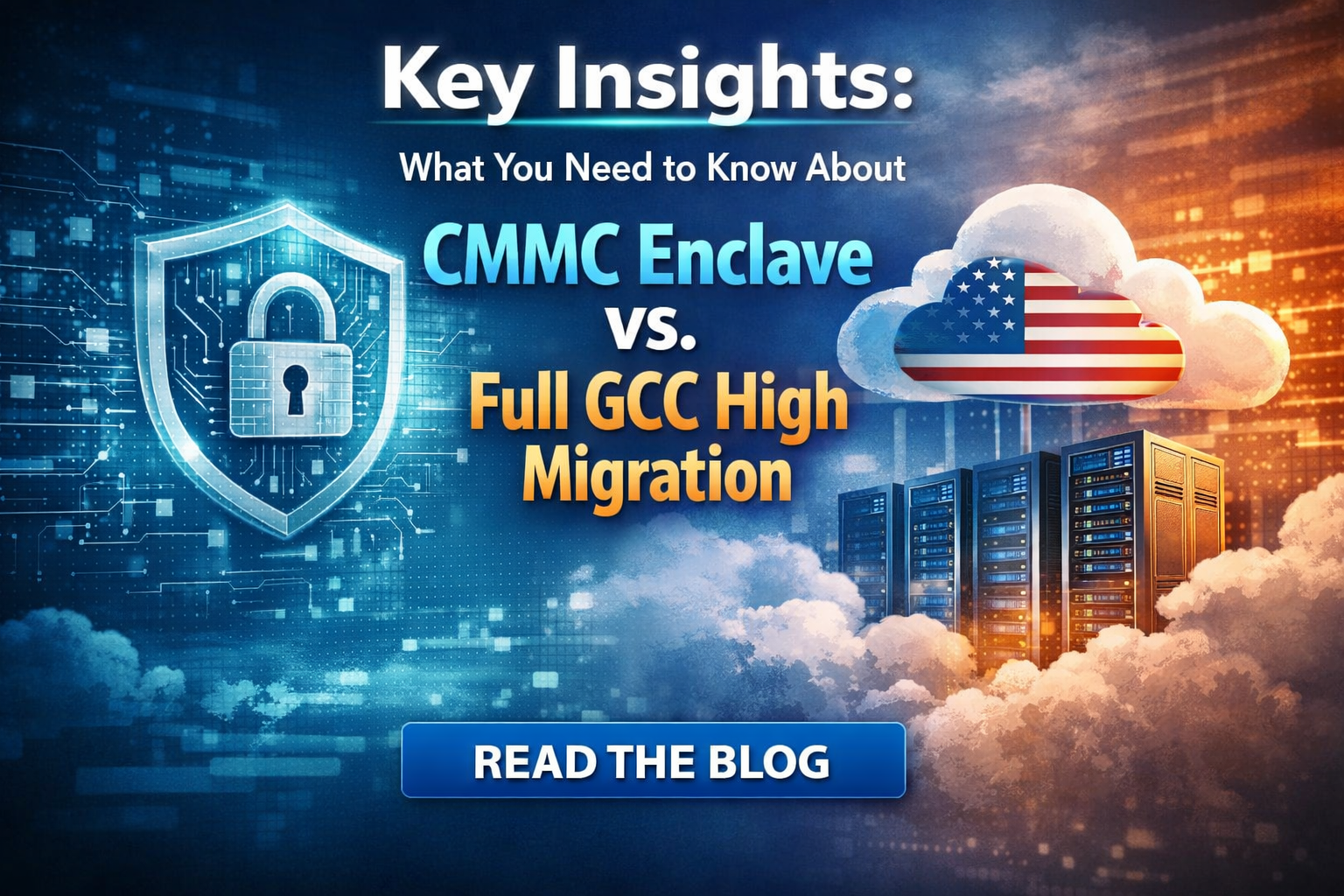
CMMC Enclave vs. Full GCC High Migration for Defense Contractors

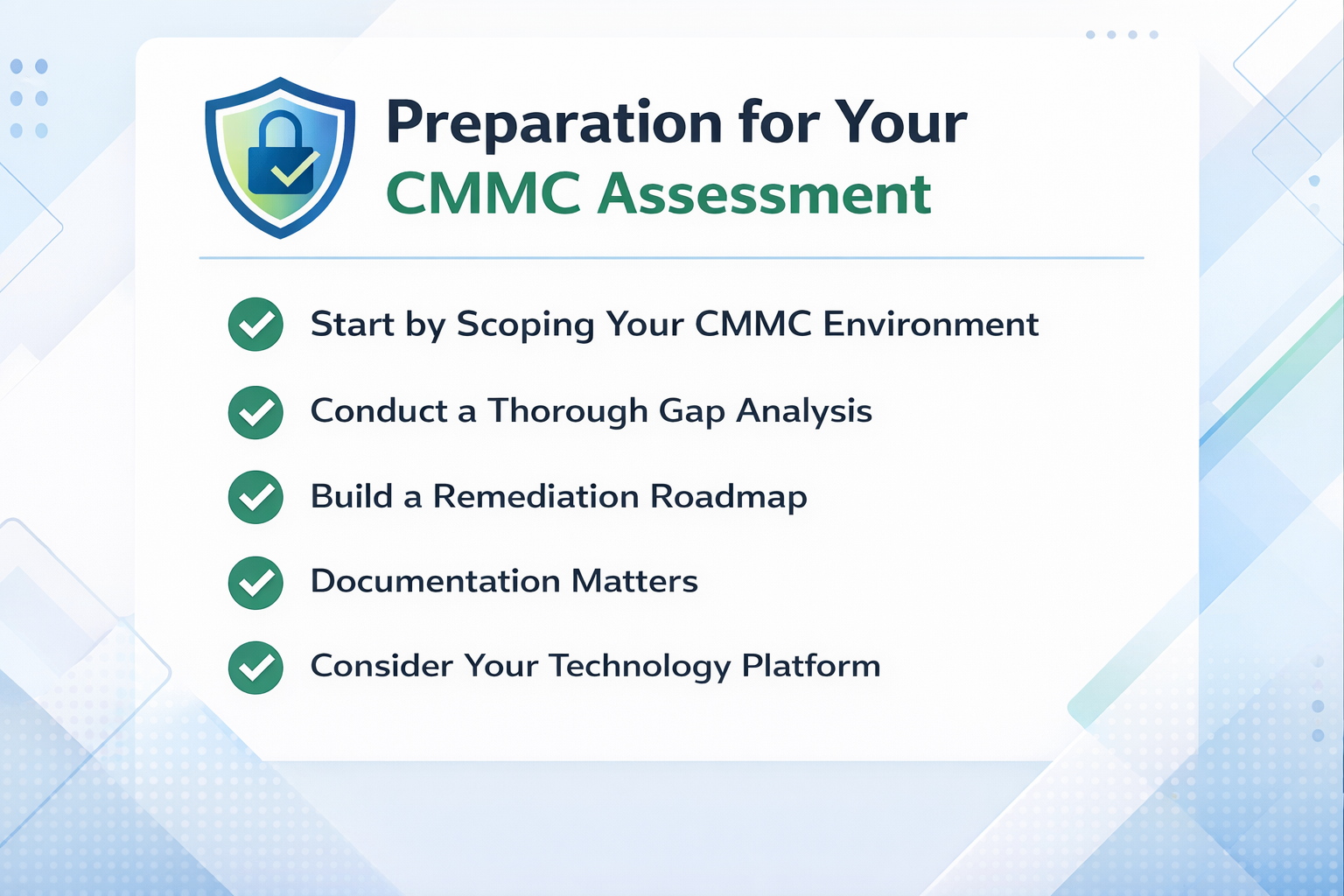
Defense contractors facing CMMC compliance have a fundamental architecture decision to make before they spend a dollar on licensing or migration services. Should you move your entire organization into a Microsoft 365 GCC High tenant, or should you build a CMMC enclave that isolates only the users and systems that handle Controlled Unclassified Information (CUI)? The answer depends on how much of your business actually touches regulated data, what your contracts require, and how much complexity your IT team can realistically manage.

This guide compares both approaches so you can make the right call for your organization's compliance posture, budget, and operations.

Key Insights: What You Need to Know About CMMC Enclave vs. Full GCC High Migration

Read More
Wed, Apr 01, 2026
Share:   

Unlocking Enterprise AI: How Microsoft Purview and Foundry Simplify Compliance

Native Integration Brings Seamless Governance and Security to AI Applications

For years, the story of enterprise AI has followed a predictable storyline: a promising use case receives approval, a development team builds something impressive, and then the project stalls. The reason is not that the technology failed, but rather that compliance could not keep up. Security reviews, data classification requirements, audit trails, retention policies, and governance work consistently take longer to complete than the actual development.

Microsoft recently announced native integration between Foundry and Purview, and for IT and security leaders who have been watching AI adoption intersect with compliance requirements, this is a development worth paying attention to.

What's Actually Changed

Read More
Thu, Mar 12, 2026
Share:   

CMMC 2.0 Explained: What Defense Contractors Must Do to Stay Eligible

The regulatory countdown that defense contractors have been watching for years is finally over. On November 10, 2025, the Department of Defense began including CMMC 2.0 requirements in contract solicitations - transforming cybersecurity compliance from a policy goal into a binding contractual obligation for anyone in the defense supply chain. If you manufacture components for the DoD, provide engineering services, or operate anywhere in the defense industrial base, CMMC 2.0 compliance now directly determines whether you can bid on and win contracts.

Read More
Tue, Feb 17, 2026
Share:   

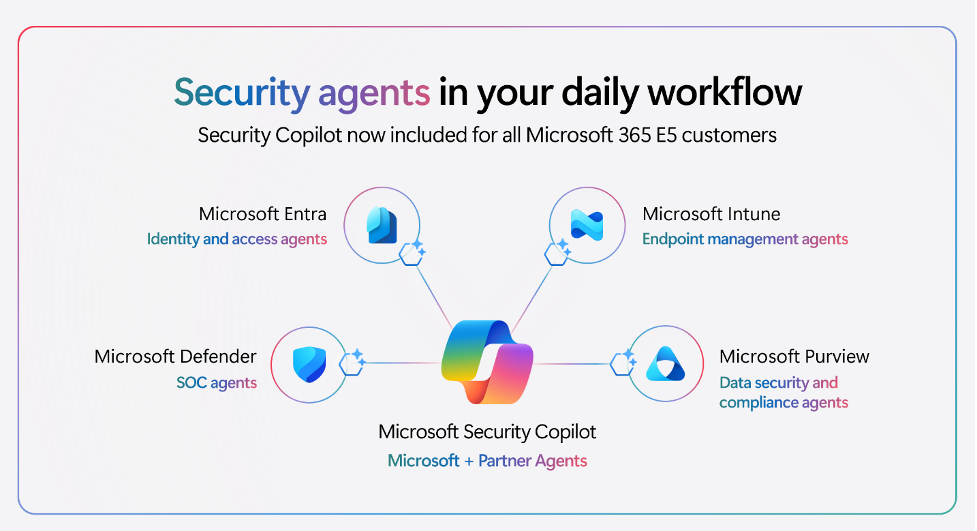
Microsoft Security Engineering Airlift 2026: Advancing Security for the AI Era

Key Innovations and Insights from the Heart of Microsoft HQ

Microsoft Security Engineering Airlift is an exclusive, invitation‑only event designed to bring together Microsoft’s top engineering teams with a select group of their most strategic and technically advanced partners. A group of my Daymark colleagues and I had the privilege of attending this event for an opportunity to gain unprecedented access to product groups, roadmap insights, and advanced security engineering guidance directly from the teams that build Microsoft’s cybersecurity technologies.

At the core of Microsoft Security’s mission is a powerful motto: “Make the world a safer place for all.” This vision guided the 2026 Microsoft Security Engineering Airlift, held at Microsoft headquarters, as we explored the latest advancements in protecting our digital world. The central theme of the event focused on the dual commitment to security for AI and AI for security, recognizing that artificial intelligence serves both as a powerful tool and a critical asset that must be protected.

Read More
Wed, Feb 04, 2026
Share:   

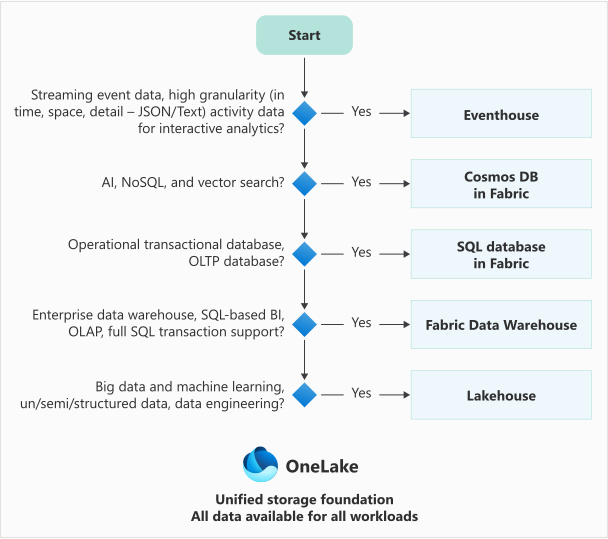
Fabric SQL Database vs Fabric Data Warehouse: Aligning Workloads to the Right Engine

Overview

For many years, organizations commonly relied on on‑premises SQL Server as their enterprise data warehouse. While this approach made sense when cloud platforms were immature, it is no longer necessary, or efficient, in modern analytics architectures. Microsoft Fabric fundamentally changes this model by providing purpose-built, cloud-native analytical engines that eliminate the need to manage traditional data warehouse infrastructure.

Within Fabric, SQL Database and Data Warehouse serve different but complementary roles. Understanding when to use each is critical to building a scalable, governed, and future-proof data platform.

Instead of lifting and shifting legacy SQL Server workloads into the cloud, organizations can now adopt services designed specifically for analytical patterns, elasticity, and tight integration with the broader Fabric ecosystem.


The Shift Away from On-Prem SQL Server as a Data Warehouse

Read More
Mon, Jan 26, 2026
Share:   

What Native dbt in Microsoft Fabric Means for Data Teams

Overview

The data engineering community has long embraced dbt (Data Build Tool) for its simple, SQL-first approach to building, testing, and orchestrating data transformations. Historically, teams using dbt with Microsoft Fabric had to rely on external compute (local development machines, GitHub Actions, Azure DevOps pipelines, virtual machines, or standalone orchestration platforms like Airflow). These setups worked, but they added friction: managing environments, handling adapters, configuring authentication, and monitoring transformation jobs across disparate systems.

With dbt jobs now running natively inside Microsoft Fabric, that fragmentation disappears. dbt is no longer an external tool bolted onto the modern data estate, it is now a first‑class, integrated capability of Fabric, providing a unified experience for modeling, testing, scheduling, and monitoring transformations directly inside Fabric workspaces.

dbt, Natively Integrated: What’s New

Read More
Mon, Jan 19, 2026
Share:   

Fabric Data Agents Meet Microsoft 365 Copilot: The Future of Data-Driven Productivity

Overview

Microsoft Fabric has been steadily transforming the data landscape with its unified analytics platform. One of its most powerful components, Fabric Data Agents, enables organizations to automate data workflows, orchestrate pipelines, and manage complex data operations with ease. Now, with these Data Agents being consumed into Microsoft 365 Copilot, the game changes entirely. This integration bridges the gap between enterprise data and everyday productivity tools, making insights more accessible and actionable than ever before.

More than 28,000 customers are already leveraging Microsoft Fabric, including 80% of the Fortune 500. This adoption underscores the trust and scale behind the platform and now, bringing that capability into Copilot amplifies its impact across the enterprise.

Key Points

Read More
Mon, Jan 12, 2026
Share:   

5 Reasons to Leverage a M365 Backup Solution

Why Relying on Native Microsoft 365 Protection Isn’t Enough 

As more organizations transition to Microsoft 365 (M365) for email, collaboration, and file storage, it’s easy to assume that your data is fully protected in the cloud. However, relying solely on Microsoft’s native capabilities could leave your business vulnerable to data loss, human error, and cyber threats. In this blog post, we’ll explore five compelling reasons why investing in a dedicated M365 backup solution is essential for safeguarding your business-critical information.

1. Microsoft Does Not Natively Back Up Your Data

Read More
Thu, Jan 08, 2026
Share:   

Delta vs Parquet: How They Work Together in Modern Data Architectures

Overview

Modernizing a data pipeline isn’t just about adopting the latest technology, it’s about choosing the right foundation for your data. File formats play a critical role in performance, scalability, and governance. Two widely used formats in modern data lakes are Parquet and Delta. While Parquet is a columnar storage format optimized for analytics, Delta builds on Parquet by adding transactional consistency and metadata management. Understanding how they work together and when to use each is key to designing a future-ready architecture.

Key Considerations: Parquet vs Delta

Read More
Mon, Dec 29, 2025
Share:   

Getting Back to the Basics: Batch vs Streaming (Real-Time)


Overview

In today’s data-driven world, it’s easy to get caught up in advanced architectures and cutting-edge tools. But before diving into complex solutions, understanding the fundamentals is critical. One of the most important distinctions in data processing is Batch vs Streaming (Real-Time). These two paradigms define how data moves, how it’s processed, and ultimately how insights are delivered.

Batch processing has been the backbone of analytics for decades, enabling organizations to process large volumes of data at scheduled intervals. Streaming, on the other hand, focuses on processing data as it arrives, delivering insights in real time. Both approaches have their place, and knowing when to use each is essential for building efficient, cost-effective, and scalable solutions.

In this article, we’ll break down what batch and streaming mean, how they work, and why understanding these basics is the foundation for any modern data strategy.

How It Works: Batch vs Streaming

Read More
Mon, Dec 15, 2025
Share: