

Overview
Organizations often rush to ingest data without considering the bigger picture. How that data will be governed, secured, and integrated across the enterprise. This approach leads to fragmented environments, compliance risks, and operational inefficiencies. A data landing zone solves this by providing a structured, strategic foundation for your entire data architecture.
A landing zone is not just a storage bucket or a raw data layer. It is a comprehensive framework that defines governance, networking, security, and operational standards before any data enters your environment.
What Is a Data Landing Zone?
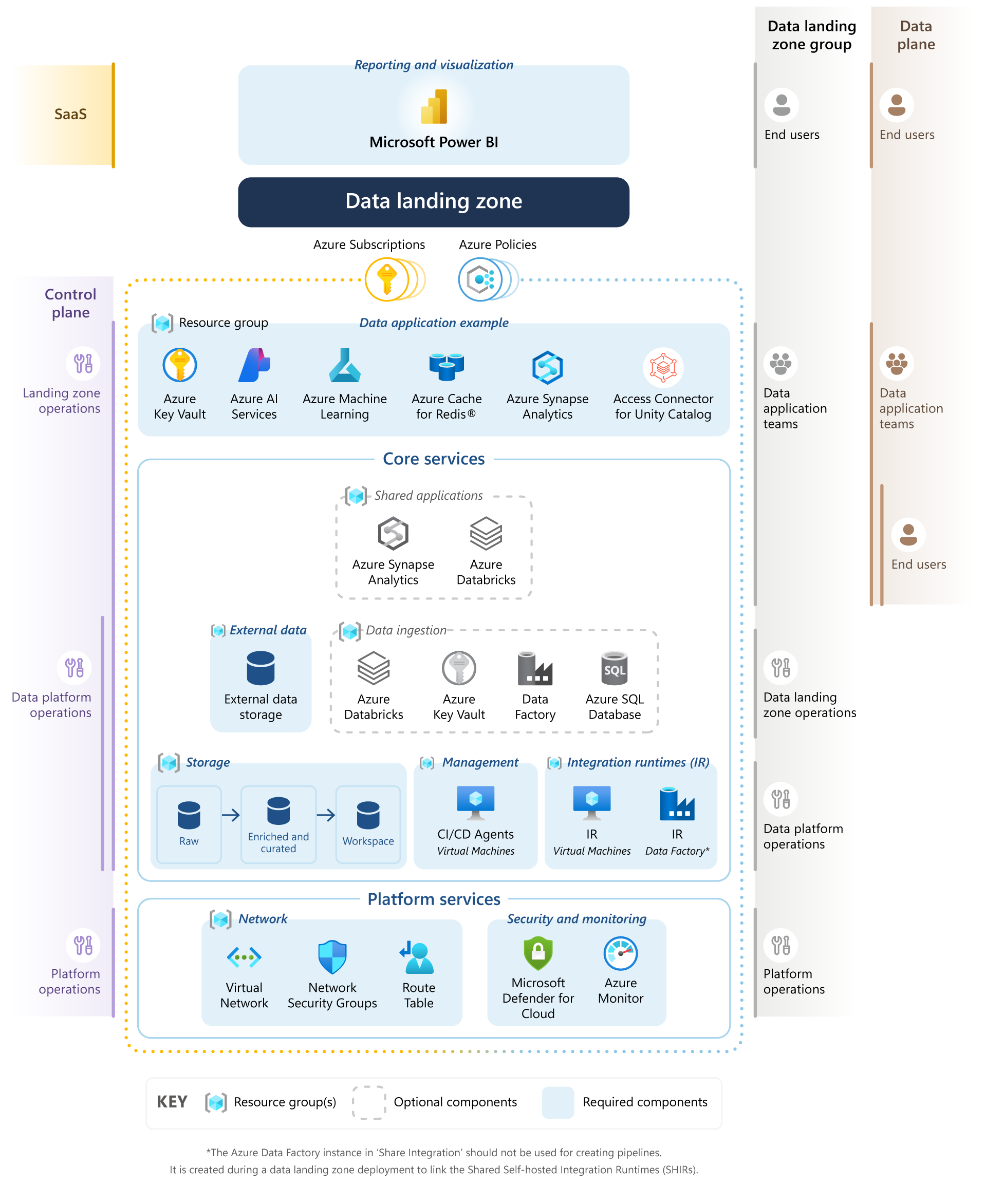
A data landing zone is the blueprint for your data platform, encompassing:
- Governance Policies
Standards for data classification, retention, encryption, and auditing. - Networking Architecture
Private endpoints, VNET integration, and firewall rules to secure connectivity. - Identity and Access Management
Role-based access control (RBAC), conditional access, and least-privilege principles. - Operational Standards
Naming conventions, folder structures, and metadata tagging for consistency. - Integration and Automation
Defined ingestion pipelines, orchestration patterns, and monitoring frameworks.
This design keeps storage, compute, and analytics components in a scalable, compliant environment.
Why Structured Design Before Ingestion Is Critical
- Compliance and Risk Management
Regulatory frameworks like GDPR, HIPAA, and CMMC require strict controls. A landing zone enforces these from day one. - Security by Design
Networking and identity controls prevent unauthorized access and data leaks. - Scalability and Future-Proofing
A well-architected landing zone supports growth without costly redesigns. - Operational Efficiency
Standardization reduces complexity and accelerates automation. - Cost Optimization
Proper planning avoids redundant resources and inefficient data flows.
Best Practices for Building a Data Landing Zone
- Start with Governance: Define compliance, security, and lifecycle policies upfront.
- Design Networking First: Implement private connectivity and firewall rules.
- Implement RBAC and Identity Controls: Align with zero-trust principles.
- Plan for Metadata and Cataloging: Enable discoverability and lineage tracking.
- Automate Everything: From ingestion to monitoring, use orchestration tools for consistency.
Final Thoughts
A data landing zone is the backbone of a secure, scalable, and compliant data platform. It is not just about where data lands, it is about how your entire architecture is structured to handle data responsibly and efficiently. Investing in this design before ingestion ensures governance, security, and operational excellence from the start.
If you would like to learn more about how a well-designed data landing zone can strengthen governance, security, and scalability in your data architecture, feel free to connect with me on LinkedIn!