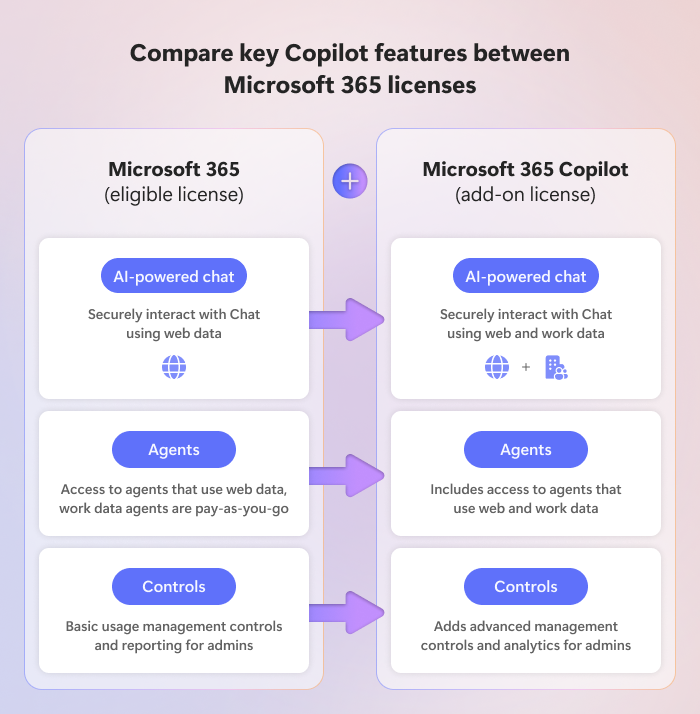

The IT director at a 220-person defense supplier walks into a Wednesday afternoon budget meeting with a question her CFO has asked twice already: "If we want to give Copilot to 50 of our engineers in GCC High, what does that actually cost us this year?" She opens the Microsoft licensing page, scans through commercial Copilot pricing, and quickly realizes none of those numbers apply to her environment. GCC High licensing is not on the public price list. Copilot in GCC High requires prerequisite licenses she has not budgeted for. Copilot Studio adds another line item nobody has scoped. By the end of the meeting, the CFO has approved nothing because nobody can answer the simple question of cost.
Read MoreProgram managers keep asking their leadership when they can use Copilot to summarize contract documents. What do I tell them?
The IT team has been holding the line for two years with a clear answer: not yet, not for anything that touches Controlled Unclassified Information. That answer is no longer current.
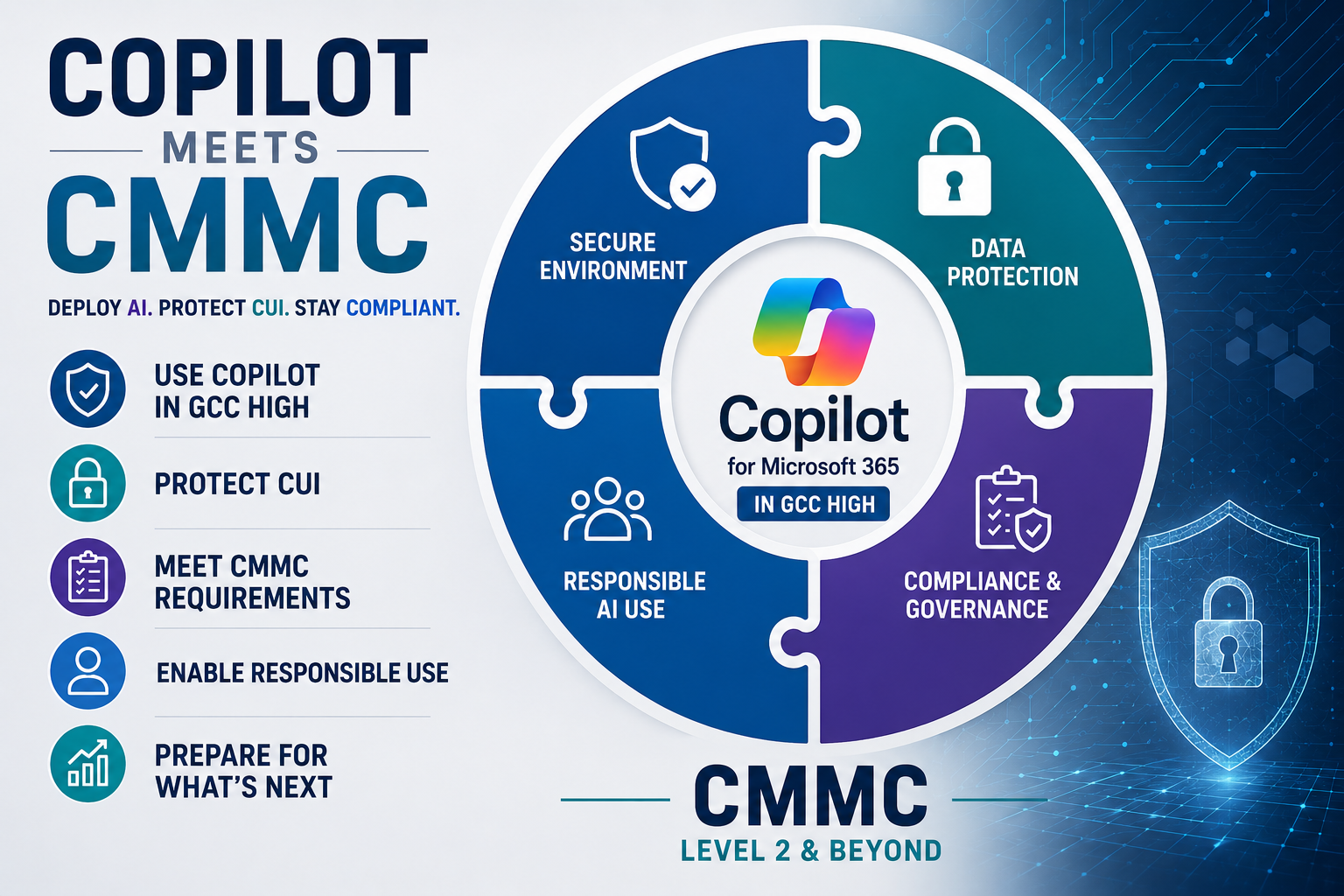
Microsoft 365 Copilot reached general availability in GCC High in December 2025, and the question has shifted from "is it available?" to "how do we deploy it without breaking our CMMC posture?"
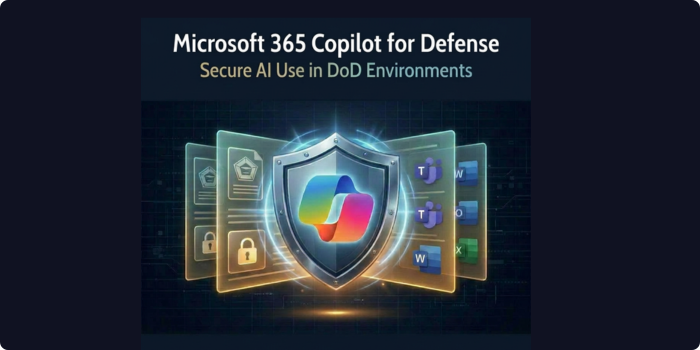
Read MoreDefense contractors have spent the last two years watching commercial organizations transform their workflows with AI while wondering when Microsoft 365 Copilot for defense environments would actually become available. That wait ended in December 2025, and the implications for how DIB organizations work with sensitive data are significant.
Key Insights: What You Need to Know About Microsoft 365 Copilot for Defense
- Copilot for defense contractors became a reality in December 2025 when Microsoft announced general availability of Microsoft 365 Copilot in GCC High, the sovereign cloud environment required for handling Controlled Unclassified Information (CUI) under DoD contracts.
- Copilot in GCC High operates within a physically separated infrastructure where all data stays in U.S.-based data centers managed exclusively by screened U.S. personnel, meeting DFARS 252.204-7012, ITAR, and CMMC requirements.
- Secure AI for DoD use depends on architecture, not promises. Web grounding is turned off by default in GCC High to prevent data leakage outside the compliance boundary, and Microsoft Entra ID for Government enforces role-based access controls.
Subscribe to Daymark Insights
Latest Posts
Browse by Tag
- Cloud (70)
- Microsoft (49)
- Security (47)
- Azure (37)
- Partners (33)
- Data Protection (32)
- Compliance (30)
- Data Center (30)
- Backup (26)
- CMMC (26)
- Daymark News (23)
- Storage (22)
- Data Governance (20)
- GCC High (18)
- Veritas (18)
- Virtualization (18)
- Cybersecurity (17)
- Featured Gov (15)
- Government Cloud (15)
- Cloud Backup (14)
- Disaster Recovery (14)
- Managed Services (13)
- AI (10)
- Industry Expertise (9)
- NIST SP 800-171 (6)
- Networking (6)
- Hybrid Cloud (5)
- Pure Storage (4)
- Copilot (3)
- Reporting (3)
- Services (3)
- AI for Defense (2)
- Cloud Security (2)
- Copilot (2)
- GDPR (2)
- CMMC 2.0 Requirements (1)
- Everpure (1)
- FedRamp AI (1)
- Mobile (1)