
Overview
Azure HorizonDB is Microsoft’s new fully managed, PostgreSQL-compatible database service built for modern cloud and AI applications. It is designed for mission-critical workloads that need predictable performance, enterprise-grade security, high availability, and scalable architecture while preserving compatibility with the PostgreSQL ecosystem.
At a high level, HorizonDB matters because it brings transactional data, cloud-native scale, and AI capabilities closer together. Instead of forcing teams to stitch together separate systems for relational data, vector search, AI model interaction, and data pipelines, HorizonDB is designed to support more of those patterns directly within a PostgreSQL-compatible platform.
This is especially important as organizations modernize applications and begin embedding AI into everyday business workflows. The database layer is becoming more than a system of record. It is becoming part of the intelligent application architecture.
Key High-Level Characteristics Everyone Should Know
- PostgreSQL-compatible foundation: HorizonDB is built on PostgreSQL compatibility, allowing organizations to use familiar tooling, extensions, and development patterns while taking advantage of Azure-managed capabilities.
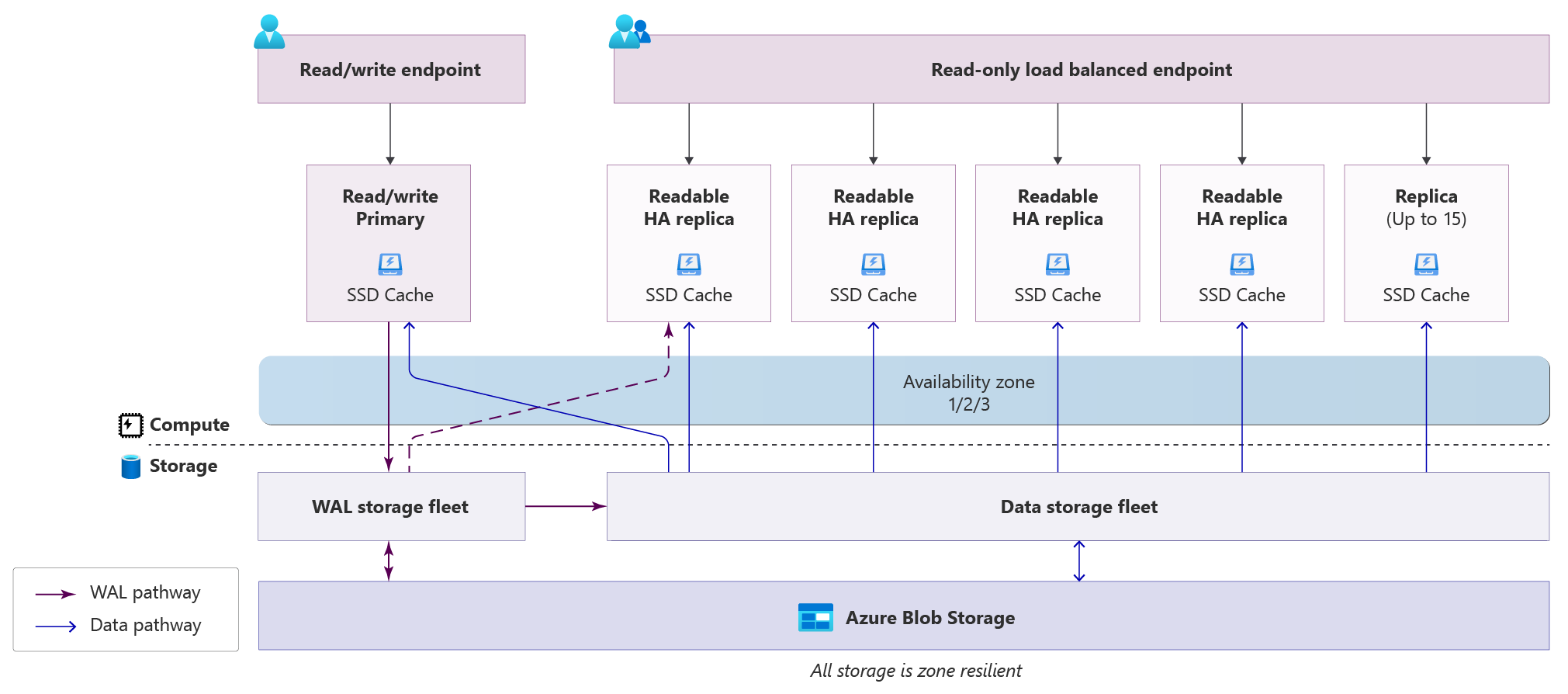
- Cloud-native architecture: The service separates compute and storage, allowing each layer to scale independently based on workload demand.
- Database-as-a-log design: HorizonDB uses write-ahead log, or WAL, as the authoritative source of truth, helping reduce write amplification and support predictable write latency.
- Built for mission-critical workloads: Microsoft positions HorizonDB for high-throughput transactional workloads such as line-of-business applications, e-commerce platforms, SaaS backends, and other performance-sensitive systems.
- Enterprise security controls: HorizonDB includes enterprise capabilities such as Microsoft Entra ID integration, private endpoints for network isolation, and encryption for data protection.
- AI-ready database capabilities: HorizonDB supports AI scenarios through vector embeddings, AI model management, AI functions, and AI pipelines.
- Vector and hybrid search: HorizonDB supports vector search through pgvector and hybrid search patterns that combine semantic similarity with full-text search.
- AI model management close to the data: Models can be registered, versioned, and governed alongside the data they operate on, helping simplify intelligent application development.
- Still in preview: HorizonDB is currently in preview, and Microsoft documents several current limitations, including backup retention, cross-region replicas, customer-managed keys, configurable maintenance windows, and long-term retention.
Final Thoughts
Azure HorizonDB is an important signal of where Microsoft is taking databases in the AI era. The database is no longer just where application data lives. It is becoming a more active layer for intelligence, retrieval, model interaction, and real-time workflows.
For organizations already using PostgreSQL, HorizonDB offers a path to combine familiar open-source database patterns with Azure-native scale, security, and AI capabilities. For organizations modernizing legacy or self-managed database platforms, it provides a way to reduce infrastructure complexity while preparing for AI-enabled application architectures.
The biggest takeaway is simple: Azure HorizonDB is Microsoft’s effort to make PostgreSQL enterprise-ready for modern AI applications. It brings together transactional performance, scale-out architecture, vector search, AI pipelines, and Microsoft ecosystem integration in a single managed platform.
Because the service is still in preview, organizations should evaluate it carefully before planning production adoption. However, it is absolutely worth watching for teams focused on PostgreSQL modernization, RAG, semantic search, intelligent applications, and tighter integration between operational data, Azure AI, and Microsoft Fabric.
If your organization is exploring PostgreSQL modernization, AI-ready application design, semantic search, RAG, or how operational databases fit into a broader Azure and Microsoft Fabric strategy, let’s talk about how these capabilities can align to your business goals.