
Overview
As organizations move from AI experimentation to real-world deployment, a common challenge emerges: connecting AI models to the systems where business data lives.
Large language models (LLMs) are powerful, but on their own, they are limited. They rely on static training data and lack direct access to real-time systems, enterprise data, and operational workflows.
That is where the Model Context Protocol (MCP) comes in.
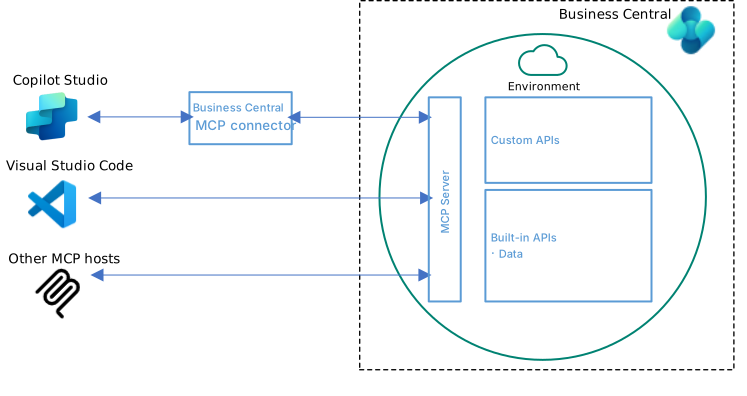
MCP is an open standard that enables AI applications to securely and consistently connect to external tools, data sources, and systems. At a high level, it represents a shift from isolated AI models to connected, context-aware systems that can operate within real business environments.
As enterprises scale AI initiatives, MCP is emerging as a foundational capability for enabling more dynamic, integrated, and production-ready AI solutions.
What is MCP, Why it Matters, and How it Fits into the Modern AI Stack
Read More