
Overview
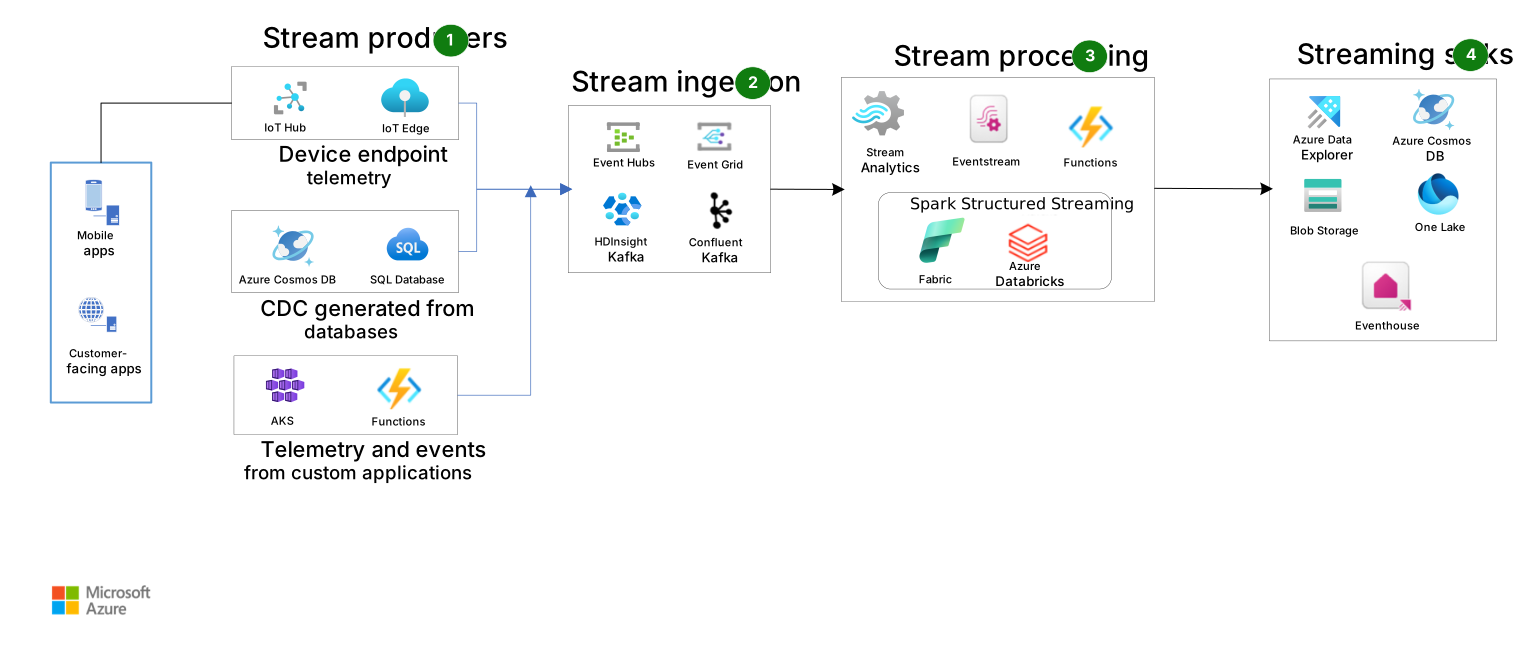
Real-time data processing is no longer optional; it’s essential for businesses that want to act on insights instantly. Microsoft offers two powerful solutions for streaming analytics: Azure Stream Analytics (ASA) and Microsoft Fabric Eventstreams. Both enable organizations to capture, process, and analyze data as it arrives, but they take different approaches to solving the same challenge.
Azure Stream Analytics has been a trusted platform for years, delivering robust, developer-focused capabilities for complex event processing. Meanwhile, Fabric Eventstreams introduces a modern, SaaS-based experience that simplifies real-time data integration and analytics for everyone, not just developers. This shift signals where Microsoft is heading: toward a unified, accessible, and future-ready data ecosystem.
In this article, we’ll break down how each solution works, their key differences, and why Fabric Eventstreams is positioned as the future of real-time analytics.
How It Works: Azure Stream Analytics and Fabric Eventstreams
Microsoft Fabric Eventstreams: Real-Time Intelligence Made Simple
Fabric Eventstreams is part of Microsoft Fabric’s Real-Time Intelligence offering. It provides a no-code interface for ingesting, transforming, and routing events to destinations like Power BI, KQL databases, and Eventhouses. Here’s what makes it stand out:
- No-Code Experience: Configure event routing and transformations without writing SQL or code.
- Unified Fabric Integration: Seamlessly connect to Fabric components for analytics and governance.
- Kafka Support: Use Kafka endpoints for modern streaming architectures.
- SaaS Simplicity: No infrastructure to manage; just log in and start streaming.
Eventstreams is designed for accessibility, enabling business users and analysts to work with real-time data without relying on engineering teams. This democratization of streaming analytics is a major step forward.
Azure Stream Analytics: Developer-Centric Power
Azure Stream Analytics is a fully managed PaaS solution built for high-throughput, low-latency scenarios. It uses a SQL-like query language for defining transformations, joins, and windowing operations. Key features include:
- Advanced Querying: Perform complex event processing with temporal joins and anomaly detection.
- Deep Azure Integration: Connect to Event Hubs, IoT Hub, Blob Storage, and Synapse.
- Custom Code Support: Extend functionality with JavaScript or C#.
- Scalability: Handle millions of events per second for mission-critical workloads.
ASA is ideal for organizations deeply invested in Azure and requiring granular control over streaming pipelines.
Why This Matters: The Benefits
- Security and Compliance: Both solutions offer enterprise-grade encryption and governance.
- Flexibility: Choose between developer-driven control (ASA) or business-friendly simplicity (Eventstreams).
- Performance: Optimize for real-time dashboards, IoT telemetry, or operational monitoring.
- Future-Ready: Fabric Eventstreams aligns with Microsoft’s vision for a unified analytics platform, making it the clear choice for organizations adopting Fabric.
Final Thoughts
Azure Stream Analytics remains a strong option for complex, Azure-centric architectures. However, Fabric Eventstreams is the future of real-time analytics. Its SaaS model, no-code experience, and deep integration with Fabric’s ecosystem make it the go-to solution for enterprises seeking agility and simplicity without sacrificing scalability.
Your organization can start small, connect confidently, and unlock real-time insights faster than ever. If you’re planning for the next generation of analytics, Fabric Eventstreams should be at the top of your list.
If you have any questions or just want to talk, feel free to reach out to me on Linkedin!