
banner-why-daymark.jpg

Cole Tramp's Microsoft Insights

Microsoft Experiences from the Front Line

Azure Stream Analytics vs. Microsoft Fabric Eventstreams

Overview

Real-time data processing is no longer optional; it’s essential for businesses that want to act on insights instantly. Microsoft offers two powerful solutions for streaming analytics: Azure Stream Analytics (ASA) and Microsoft Fabric Eventstreams. Both enable organizations to capture, process, and analyze data as it arrives, but they take different approaches to solving the same challenge.

Azure Stream Analytics has been a trusted platform for years, delivering robust, developer-focused capabilities for complex event processing. Meanwhile, Fabric Eventstreams introduces a modern, SaaS-based experience that simplifies real-time data integration and analytics for everyone, not just developers. This shift signals where Microsoft is heading: toward a unified, accessible, and future-ready data ecosystem.

In this article, we’ll break down how each solution works, their key differences, and why Fabric Eventstreams is positioned as the future of real-time analytics.


How It Works: Azure Stream Analytics and Fabric Eventstreams

Read More
Dec 8, 2025 7:00:00 AM
Share:   

From On-Prem to Cloud: Simplifying Your Data Lakehouse Connection

Overview

Moving to a cloud data lakehouse can feel like a big leap, especially if your data still lives on-premises. The good news? Connecting your existing systems to modern platforms like Microsoft Fabric or Azure Synapse Analytics is easier than you might think. Both solutions are designed to bridge the gap between on-prem and cloud seamlessly, ensuring your data flows securely and efficiently without disrupting your operations.

In this article, we’ll break down how these connections work, why they matter, and the benefits you’ll gain by making the move.

How It Works: Microsoft Fabric and Azure Synapse

Read More
Dec 1, 2025 10:21:37 AM
Share:   

Microsoft IQ:  The Rise of Enterprise Intelligence Layers

Overview

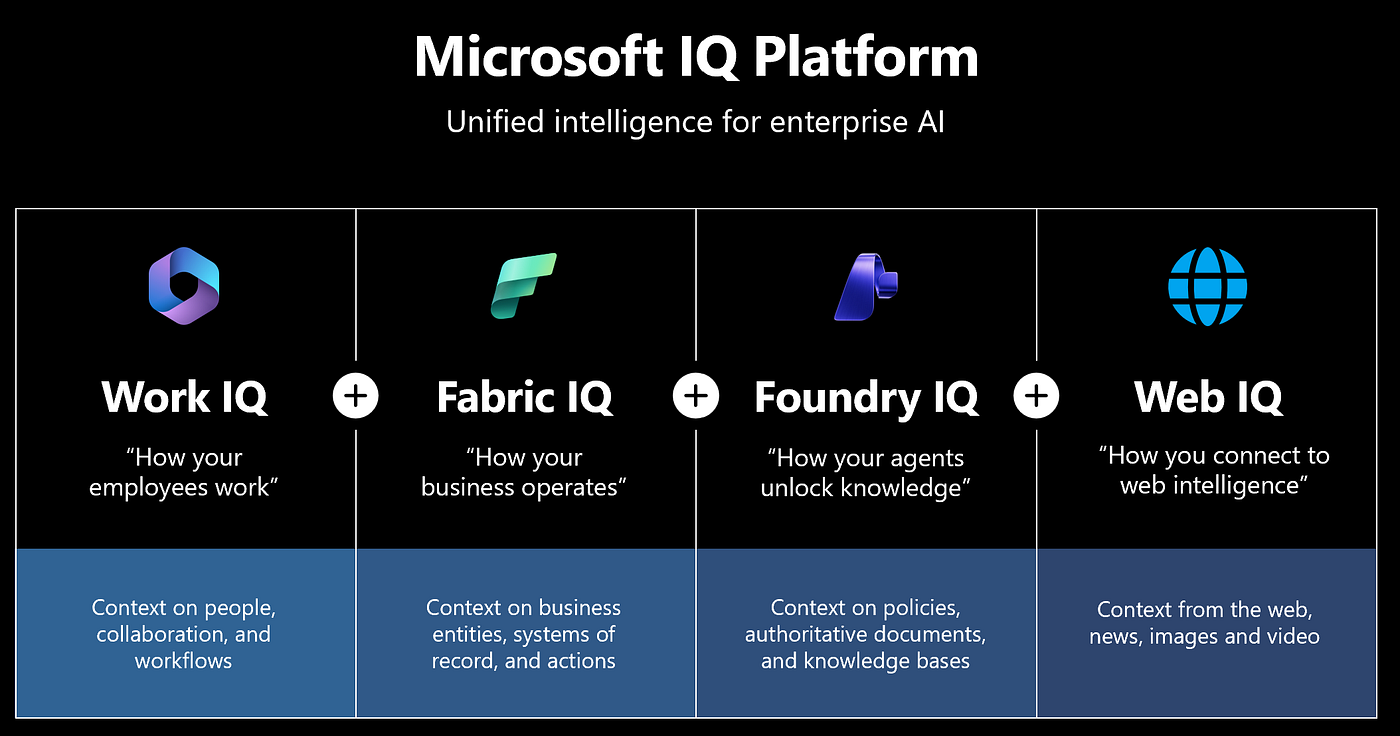
At Microsoft Ignite last week the company unveiled a bold vision for enterprise AI: moving beyond isolated copilots and chatbots toward a unified, agentic architecture. Central to this strategy are three interconnected intelligence layers: Work IQ, Fabric IQ, and Foundry IQ, designed to make AI agents context-aware, business-savvy, and governable at scale. These layers form the backbone of Microsoft’s approach to creating “Frontier Firms,” organizations that embed AI into every workflow while maintaining security and compliance.

The challenge Microsoft aims to solve is clear: large language models alone aren’t enough. Enterprises need systems that understand how work happens, interpret business meaning, and retrieve knowledge safely. Work IQ, Fabric IQ, and Foundry IQ deliver exactly that.

Read More
Nov 24, 2025 8:00:03 AM
Share:   

The Basics of Data Engineering: Understanding the Medallion Architecture

Overview

Modern analytics platforms, such as Microsoft Fabric, Azure Synapse, Databricks, and Snowflake, are designed to help organizations unlock the full potential of their data. While each platform offers unique capabilities, the real differentiator lies in how you structure and manage your data. A proven approach for building scalable, governed, and high-performing data solutions is the Medallion Architecture.

The Medallion Architecture organizes data into progressive layers, Bronze, Silver, and Gold, to ensure that raw data evolves into trusted, analytics-ready assets. This layered design is platform-agnostic, meaning it works regardless of whether you’re using a lakehouse, data warehouse, or hybrid architecture. Some organizations even extend this model with Platinum and Development zones for advanced analytics and experimentation.

What is the Medallion Architecture?

Read More
Nov 17, 2025 7:00:01 AM
Share:   

Effortless Data Sync: Change Data Capture in Copy Job for Fabric Pipelines

Overview

Let’s face it. Nobody wakes up excited to manually track data changes across systems. That’s why Microsoft Fabric’s Data Factory has introduced a new best friend for data engineers: Change Data Capture (CDC) in Copy Job (Preview). It’s like having a super-efficient intern who never sleeps, never complains, and always knows exactly which rows were inserted, updated, or deleted.

This feature is designed to keep your destination data fresh and synchronized with minimal effort. Whether you're wrangling Azure SQL DB, SQL Server, or Fabric Lakehouse tables, CDC in Copy Job helps you move data smarter, not harder.

What Is CDC in Copy Job?

Read More
Oct 6, 2025 8:00:01 AM
Share:   

Understanding the Differences: Copilot, Copilot Studio, and Azure AI Foundry

Overview

As AI becomes increasingly embedded in the modern workplace, Microsoft has introduced a suite of tools designed to empower users at every level of technical expertise. Among these are Copilot, Copilot Studio, and Azure AI Foundry. Each serves a distinct purpose in the AI development and deployment lifecycle. Understanding the differences between these tools is essential for organizations looking to harness AI effectively and strategically.

Copilot (M365): Built-In Intelligence for Everyday Users

Read More
Sep 29, 2025 8:15:00 AM
Share:   

Serverless Spark in Fabric: Independent, Predictable, and Cheaper

Overview

Let’s say you are running Spark workloads in Microsoft Fabric. You have committed capacity (CUs) to handle your usual work like BI, data transformation, and dashboards. But Spark jobs can spike unpredictably. If you tie Spark to that shared capacity, those spikes can starve your regular workloads or force you to overprovision capacity, which wastes money.

Autoscale Billing for Spark solves this problem by letting Spark operate independently. Once enabled, serverless Spark does not consume your assigned Fabric capacity units. Instead, each Spark job spins up on its own dedicated resources. You are billed per use, and your other workloads are unaffected.

In short: turn it on, forget about it, and let Spark run without disrupting everything else.

How Serverless Spark Works Without Using Fabric Capacity Units

Here is what happens under the hood:

Read More
Sep 22, 2025 8:00:00 AM
Share:   

Making Sense of Microsoft Fabric Domains: Organize, Govern, and Scale with Confidence


Overview

Every organization today is swimming in data. The challenge isn’t collecting it, it’s making sure the right people can actually find, use, and trust it. That’s where Microsoft Fabric Domains come in. Think of them as a way to bring order to the chaos. Instead of one central IT team trying to juggle everything, Fabric Domains shift ownership to individual business areas like Sales, HR, or Marketing. Each domain gathers together the workspaces that belong to that team, while subdomains allow you to get even more specific. The real magic is that domains also support governance: settings can be delegated, admins and contributors assigned, and default domains set up so things stay consistent.

Why Microsoft Fabric Domains Help

Read More
Sep 15, 2025 7:45:00 AM
Share:   

AI Functions in Microsoft Fabric: A Practical Guide

Overview

Artificial intelligence has a reputation for being complicated: long pipelines, endless model tuning, and the occasional meltdown when a library version is not "just right." Microsoft Fabric decided to skip all that drama. Enter AI Functions, a neat bundle of one-liners that let you summarize, classify, analyze, or translate text right inside your Fabric notebooks. Think of it as the IKEA version of AI: assembly required is basically zero, and the Allen wrench is already included.

What AI Functions Can Do

Instead of reinventing the wheel (or worse, downloading someone else’s badly coded one from GitHub), you get prebuilt functions that handle common tasks:

Read More
Sep 8, 2025 7:30:00 AM
Share:   

Microsoft Fabric CMKs: A Game-Changer for Gov Cloud Readiness

Overview

Microsoft Fabric continues to evolve, and the latest release of Customer Managed Keys (CMKs) is a big leap forward. For organizations watching closely for Fabric’s eventual arrival in Azure Government, this update is more than just a security checkbox. It is proof that Fabric is steadily aligning with compliance-heavy environments. Microsoft has made it clear through rep conversations and roadmaps that Fabric is expected to land in Azure Gov by late 2026. With CMKs now available, along with previously released features like Block Public Internet Access and Private Link Configuration, Fabric is building a compliance-ready foundation.

For Azure Government customers who must meet strict standards such as CMMC compliance, these new capabilities are essential. The message is clear: now is the time to start exploring Fabric in commercial tenants to prepare for the eventual Azure Gov rollout.

Why CMKs Matter

Read More
Sep 2, 2025 7:44:21 AM
Share: