

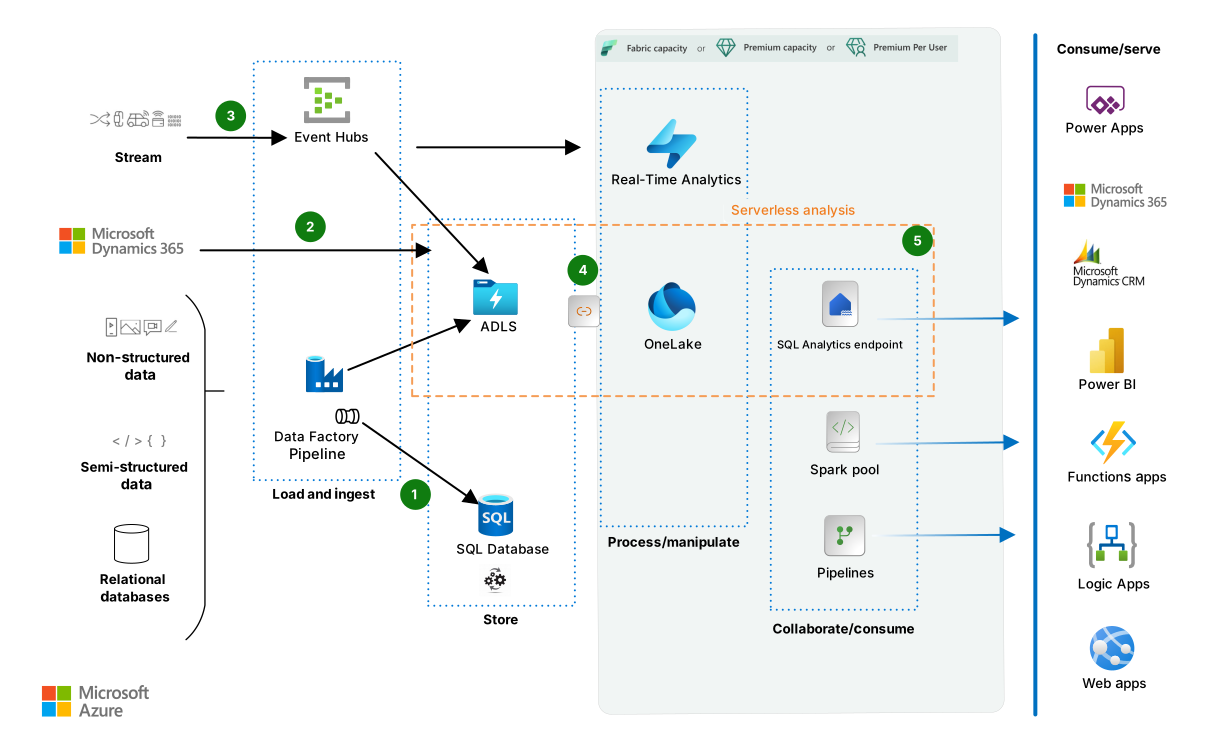
Overview
Modernizing a data pipeline isn’t just about adopting the latest technology, it’s about aligning your architecture with your business goals. Before jumping into advanced platforms or AI-driven solutions, start by asking the right questions. What do you want to achieve with your data? How is your data structured? What governance requirements do you have? These fundamentals will guide you toward a solution that is scalable, secure, and future-ready.
Key Considerations for Modernization
- What Are Your Data Goals?
Your pipeline should reflect your objectives:
- Analytics: Do you need historical trend analysis or operational dashboards?
- Machine Learning (ML): Are you preparing data for predictive models?
- Artificial Intelligence (AI): Will your pipeline support real-time inference or generative AI workloads?
Understanding your end goal determines whether you need batch processing, streaming, or a hybrid approach.
- What Format Is Your Data In?
Data comes in different shapes:
- Structured: Tables, relational databases.
- Semi-Structured: JSON, XML, logs.
- Unstructured: Images, videos, audio.
Your pipeline must handle these formats efficiently. For example, structured data might fit well in a data warehouse, while unstructured data may require a data lake or object storage.
- What Types of Data Sources Are Included?
Consider the nature of your data ingestion:
- Batch: Ideal for scheduled reporting and historical analysis.
- Streaming/Real-Time: Critical for IoT telemetry, fraud detection, or live dashboards.
Modern pipelines often combine both, enabling real-time insights while maintaining historical context.
- What Governance Should You Implement?
Governance ensures trust and compliance:
- RBAC (Role-Based Access Control): Secure access by roles.
- Data Lineage: Track data from source to destination.
- Data Labeling & Sensitivity: Protect PII and regulated data.
- Monitoring & Observability: Detect anomalies and ensure reliability.
- Data Discovery: Make it easy for teams to find and use data responsibly.
Strong governance is non-negotiable for regulated industries and enterprise-scale operations.
- What Kind of Community and Ecosystem Does the Tool Have?
Technology evolves quickly. Choose tools with:
- Active Community: Frequent updates and strong support.
- Ease of Learning: Can your team adopt it without steep training costs?
- Future Growth: Will the platform continue to innovate and integrate with emerging technologies?
A vibrant ecosystem reduces risk and accelerates adoption.
Why This Matters
Modernizing your pipeline without answering these questions can lead to over-engineering or under-delivering. By focusing on goals, data formats, ingestion patterns, governance, and community, you build a foundation that supports analytics today and AI tomorrow.
Final Thoughts
Modernization isn’t a one-size-fits-all journey. Start with the basics: What do you need your data to do? From there, design a pipeline that balances performance, cost, and compliance. The right decisions today will position your organization for success in an increasingly data-driven world.
If you’d like to discuss how these principles apply to your environment, feel free to connect with me on LinkedIn!