

Overview
At FabCon 2026, Microsoft took another important step toward reshaping how organizations manage databases by announcing the Database Hub in Microsoft Fabric. While the Database Hub is still in early access and not yet generally available, it represents a meaningful shift in how Microsoft is thinking about database management at scale.
For years, database teams have operated across fragmented tools, portals, and management experiences depending on whether the database lived on‑premises, in Azure PaaS, or in a SaaS environment. As data estates grow and AI workloads place greater pressure on operational data, that fragmentation becomes a real problem. The Database Hub is Microsoft’s answer to this challenge, providing a unified control plane for managing databases across the enterprise from within Fabric.
Anyone running SQL Server today, whether on‑premises or in Azure, should be paying close attention. This is not just another management experience. It is a signal of where Microsoft is taking databases as part of a single, converged data platform.
What the Database Hub Is
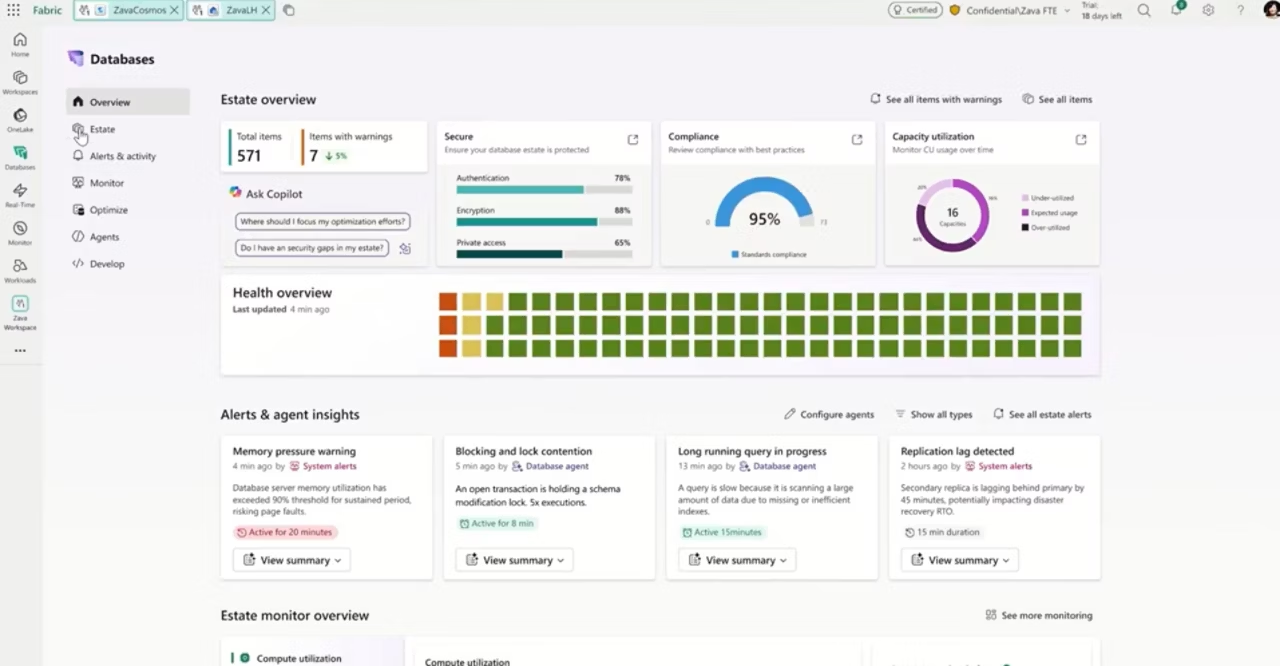
The Database Hub in Microsoft Fabric is designed to act as a centralized management and visibility layer for an organization’s entire database estate. Rather than managing Azure SQL, SQL Server, Cosmos DB, PostgreSQL, or MySQL in isolation, Database Hub brings these services together into a single experience inside Fabric.
From a practical standpoint, this means database teams have one place to:
- Discover and inventory databases across cloud, edge, and on‑prem environments
- Observe health, performance, and usage patterns
- Apply governance and policy controls consistently
- Identify optimization opportunities across databases
This is especially important as organizations continue to balance transactional workloads with analytics and AI use cases. Database Hub does not replace the underlying database services. Instead, it provides a unifying layer that helps teams manage complexity without forcing a re‑platforming effort.
At launch, Microsoft has positioned Database Hub as an agent‑assisted experience, using human‑in‑the‑loop AI capabilities to help surface insights and recommendations without fully automating critical decisions. That balance matters in enterprise environments where trust and control are still non‑negotiable.
Why This Matters for Microsoft Fabric
Database Hub is not an isolated feature. It is a foundational building block in Microsoft Fabric’s broader goal of becoming the single, end‑to‑end data platform for enterprises.
Fabric already brings together data engineering, data science, real‑time analytics, Power BI, and AI experiences on top of OneLake. By embedding database management directly into Fabric, Microsoft is effectively collapsing the historical divide between operational databases and analytical platforms.
At FabCon and SQLCon, Microsoft was clear about the direction: transactional data, operational systems, and analytical workloads should live under a consistent architecture with shared governance, security, and observability. Database Hub makes that vision tangible by treating databases as first‑class tools in Fabric rather than external systems that need to be bolted on.
For organizations adopting Fabric, this has several implications:
- Fabric becomes the central access point not just for analytics, but for understanding where critical data comes from
- Database teams and analytics teams can work from a shared platform instead of separate toolchains
- Governance, cost management, and optimization can be approached holistically
This is especially relevant as Fabric continues to position itself as an AI‑ready data platform. AI workloads demand consistent, well‑governed access to operational data. Database Hub helps establish the visibility and control needed before layering advanced analytics, Fabric IQ, or AI agents on top.
Why SQL Server Teams Should Be Paying Attention
For organizations running SQL Server today, Database Hub is particularly compelling. SQL Server environments often span on‑premises deployments, Azure VMs, managed services, and hybrid scenarios. Managing that sprawl is difficult, even for mature teams.
By integrating SQL Server, including Azure Arc‑enabled SQL Server, into Fabric’s Database Hub, Microsoft is offering a path to modernize database management without forcing immediate migration decisions. Teams can continue running SQL Server where it makes sense, while gaining centralized visibility and insight through Fabric.
Over time, this also creates a more natural on‑ramp to other Fabric capabilities, such as mirroring data into OneLake, powering Power BI directly from operational sources, or enabling AI‑driven insights across both transactional and analytical data.
Importantly, this is not about replacing DBAs. It is about giving them better tools to manage increasingly complex environments with fewer blind spots.
Final Thoughts
The Database Hub in Microsoft Fabric is still early, and it is not GA yet. But its announcement at FabCon 2026 makes one thing clear: Microsoft is serious about unifying databases and analytics into a single platform experience.
For organizations already using Fabric, Database Hub fills an important gap by bringing database management into the same conversation as governance, analytics, and AI. For SQL Server customers, it offers a forward‑looking way to modernize management practices without abandoning existing investments.
As Fabric continues to evolve, features like Database Hub reinforce Microsoft’s broader strategy: reduce fragmentation, simplify architecture, and make data ready for AI at scale. If you are responsible for database strategy today, this is absolutely a space to watch.
If you would like to talk about Microsoft Fabric, database modernization, or where Database Hub fits into your broader data platform strategy, feel free to reach out!