

Overview
As organizations adopt generative AI, one of the most important skills is learning how to ask better questions. Prompt engineering is the practice of designing and refining prompts so AI models can better understand intent, follow instructions, and produce useful responses.
For executives, prompt engineering should not be viewed as a technical trick. It is a business capability. A well-crafted prompt can improve the quality, consistency, and relevance of AI-generated outputs, whether the use case is summarizing documents, drafting communications, analyzing data, supporting customer service, or helping employees find information faster.
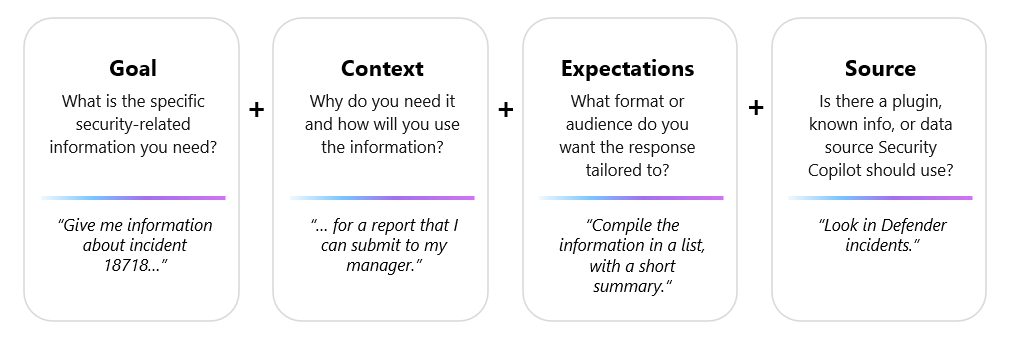
The value comes from giving the model the right mix of instructions, context, examples, and desired output format. In many cases, the difference between a generic response and a useful business answer is not the AI model itself. It is how clearly the request was framed.
Popular Techniques
Clear Instructions
The best prompts start with a clear objective. The model needs to understand what task it is being asked to perform, who the audience is, what tone to use, and how much detail to provide.
Instead of asking AI to “summarize this report,” a stronger prompt would be:
“Summarize this report in five executive-level bullet points, focusing on financial risk, operational impact, and recommended next steps.”
That small amount of added direction can make the output more focused, easier to review, and more aligned to the business decision being made.
Context and Supporting Information
AI performs better when it understands the situation. Providing background information, source material, business context, user preferences, or constraints helps the model generate a more relevant response.
For example, asking AI to “write a customer email” may produce a generic result. Asking it to “write a professional customer email explaining a delayed implementation timeline, while maintaining confidence in the project and outlining the next steps” gives the model a much clearer path.
For business users, context may include the industry, target audience, project goal, tone, compliance concern, or specific documents the response should be based on.
Few-Shot Prompting
Few-shot prompting means giving the model examples of the type of response you want before asking it to complete the task. This can be especially useful when organizations want AI outputs to follow a consistent style or format.
For example, a company may provide examples of approved executive summaries, support responses, proposal language, or internal communications. The model can then use those examples to better match the expected structure and tone.
This technique is valuable because many business processes depend on consistency. It helps AI produce outputs that feel less random and more aligned to how the organization already communicates.
Structured Output
Prompts can also define the format of the response. Asking for bullets, tables, summaries, action plans, ranked recommendations, or step-by-step explanations makes AI output easier to review and use.
This matters because an accurate response is not always enough. Executives and business teams need information in a format that supports decisions. A prompt that asks for “three risks, three recommendations, and one final takeaway” will usually produce a more usable answer than a broad request for analysis.
Structured output also helps teams standardize how AI is used across repeatable workflows such as meeting summaries, project updates, sales follow-ups, policy reviews, and operational reporting.
Step-by-Step Reasoning
For more complex problems, prompts can ask the model to break the task into steps, compare options, or explain how it reached a recommendation. This can be helpful for planning, analysis, troubleshooting, and decision support.
For example, instead of asking, “Which option is best?” a stronger prompt might ask:
“Compare these three options based on cost, speed, risk, and long-term scalability. Then provide a recommendation with the rationale.”
This approach gives the model a framework for analysis and gives the user a clearer basis for reviewing the response. However, AI-generated reasoning should still be validated, especially for financial, legal, security, operational, or compliance-related decisions.
Final Thoughts
Prompt engineering is becoming an important part of how organizations unlock value from generative AI. The better the prompt, the better the model can align to the business objective, audience, format, and expected outcome.
For executives, the takeaway is simple: prompt engineering helps turn AI from a general-purpose tool into a more practical business assistant. It improves how teams communicate with AI, reduces ambiguity, and creates more consistent results across use cases.
The organizations that get the most value from AI will not just deploy the technology. They will teach their people how to use it effectively. Prompt engineering is one of the first steps in that journey.
If your organization is looking to get started with generative AI, or wants to improve how employees use AI tools already in place, let’s talk about how to align practical AI use cases, prompt design, governance, and adoption to your business goals.