
Overview
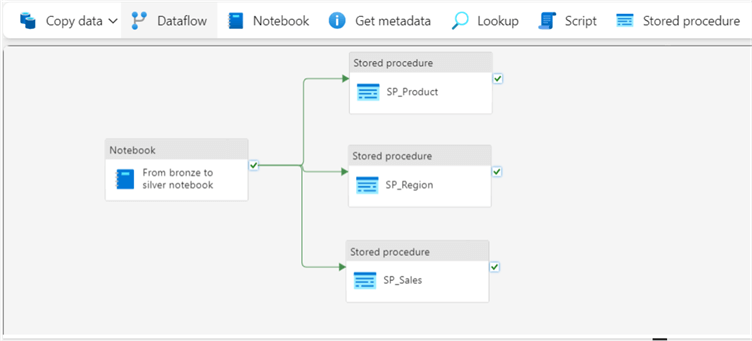
Microsoft Fabric provides multiple ways to implement transformation logic and operationalize it within Fabric Data Factory pipelines. Two of the most common approaches are Fabric notebooks and SQL stored procedures.
Both are first class tools in Fabric and both can be orchestrated through Data Factory pipelines. The difference is not about which one is better. It is about how the processing is executed, where the logic lives, and what development style best fits the workload.
Notebooks are built on Apache Spark and are designed for distributed, code driven data engineering and analytics workflows. Stored procedures run directly in the SQL engine and are optimized for relational, database centric operations. In real world Fabric architectures, it is common and often recommended to use both together.
Understanding the strengths of each helps teams design pipelines that are scalable, maintainable, and aligned with how their data is structured and governed.
Fabric Notebooks
Read More
Overview
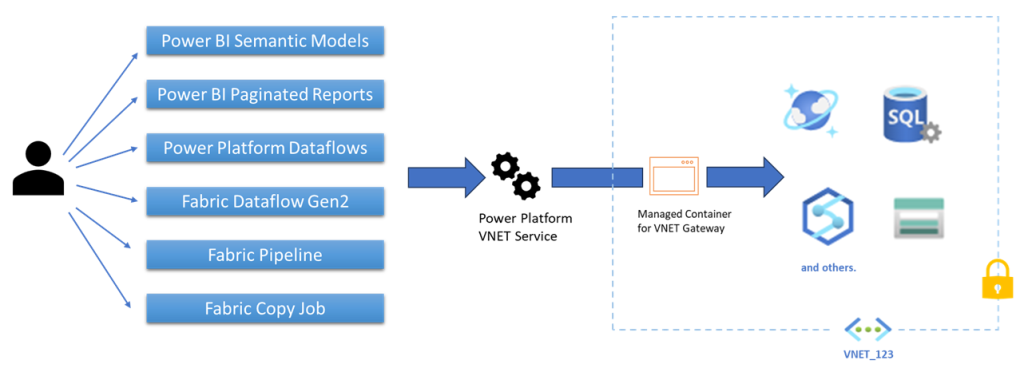
A data gateway in Microsoft Fabric and Power BI is the secure connectivity layer that allows cloud services to access data sources that aren’t publicly reachable. This includes on-premises systems, Azure resources locked behind private endpoints, and streaming platforms running inside private networks.
Gateways are critical because most real-world architectures are hybrid. Even as organizations adopt Fabric, they often need to integrate with legacy systems, tightly secured Azure services, or real-time platforms that cannot be exposed to the public internet. Gateways make this possible without compromising security or network boundaries.
Microsoft Fabric currently supports three gateway types, each optimized for a different scenario:
- On-premises data gateway
- Virtual network data gateway
- Streaming virtual network data gateway
Understanding when to use each one helps avoid unnecessary complexity and ensures the right balance of security, performance, and manageability.
What a Data Gateway Does in Fabric and Power BI
Read More
Overview
Organizations building modern analytics platforms on Azure often start with Azure Data Lake Storage Gen2 as their foundational storage layer. Azure Data Lake is highly scalable, cost effective, and flexible, making it an attractive landing zone for raw data of all types. However, without strong governance, modeling, and processing layers, many data lakes gradually devolve into what is commonly referred to as a data swamp.
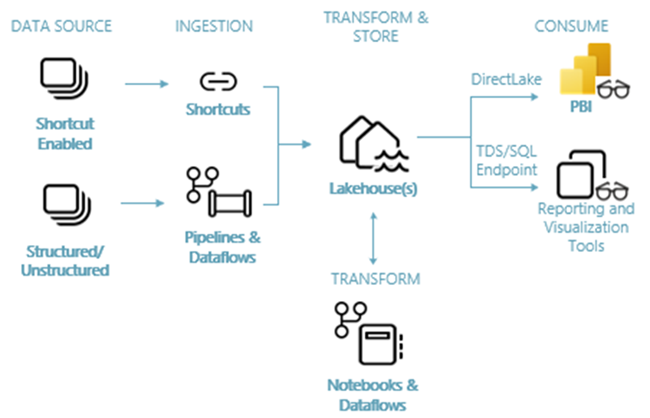
Microsoft Fabric Lakehouse was introduced to address these challenges by combining the openness of a data lake with the structure, governance, and usability of a warehouse. Unlike a traditional data lake, Fabric Lakehouse is delivered as a fully managed SaaS experience that tightly integrates storage, compute, governance, security, and analytics into a single platform.
Understanding the differences between Azure Data Lake and Fabric Lakehouse is critical when designing scalable, maintainable, and business-ready data architectures.
Azure Data Lake Storage Gen2
Read More
Overview
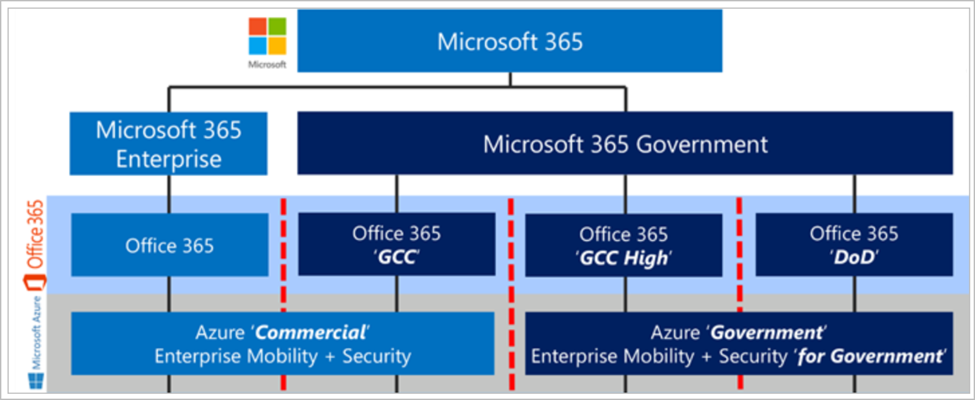
Microsoft operates multiple Azure cloud environments to support a wide range of regulatory, security, and compliance needs. Two of the most important, and most commonly misunderstood, are Azure Commercial (Public) and Azure Government. While both environments are built on the same underlying Azure technology stack, they are designed for fundamentally different use cases, particularly when paired with Microsoft 365 offerings such as Commercial, GCC, GCC High, and DoD.
Azure Commercial, also referred to as global or public Azure, is Microsoft’s standard cloud platform used by enterprises worldwide. It offers the broadest service catalog, the fastest access to new features, and global regional availability. Both Microsoft 365 Commercial tenants and GCC (Government Community Cloud – Moderate) tenants rely on Azure Commercial as their underlying Azure platform.
Azure Government, by contrast, is a separate, sovereign cloud built exclusively for U.S. government agencies and their authorized partners. It operates in physically isolated U.S. datacenters, is managed by screened U.S. persons, and is authorized for high‑impact government workloads. This separation is not merely contractual or logical; it is enforced across the infrastructure, network, and identity layers.
Because of these enforced boundaries, Azure Government is the required Azure platform for organizations using Microsoft 365 GCC High or Microsoft 365 DoD. Both of these Microsoft 365 environments are paired with Microsoft Entra ID in Azure Government, ensuring identity, data residency, and access controls remain within the same sovereign cloud boundary.
Comparison: Azure Commercial vs Azure Government
Read More
Overview
Organizations modernizing their data ecosystems now manage data flowing from cloud applications, SaaS platforms, on-premises systems, and streaming sources. Traditional ETL tools such as SQL Server Integration Services (SSIS) have long powered enterprise data warehousing and batch integration, offering a robust, code-optional environment for building data workflows. SSIS provides a Windows-based, SQL Server-centric platform for extracting, transforming, and loading data using visual design tools, built-in connectors, and highly customizable task orchestration.
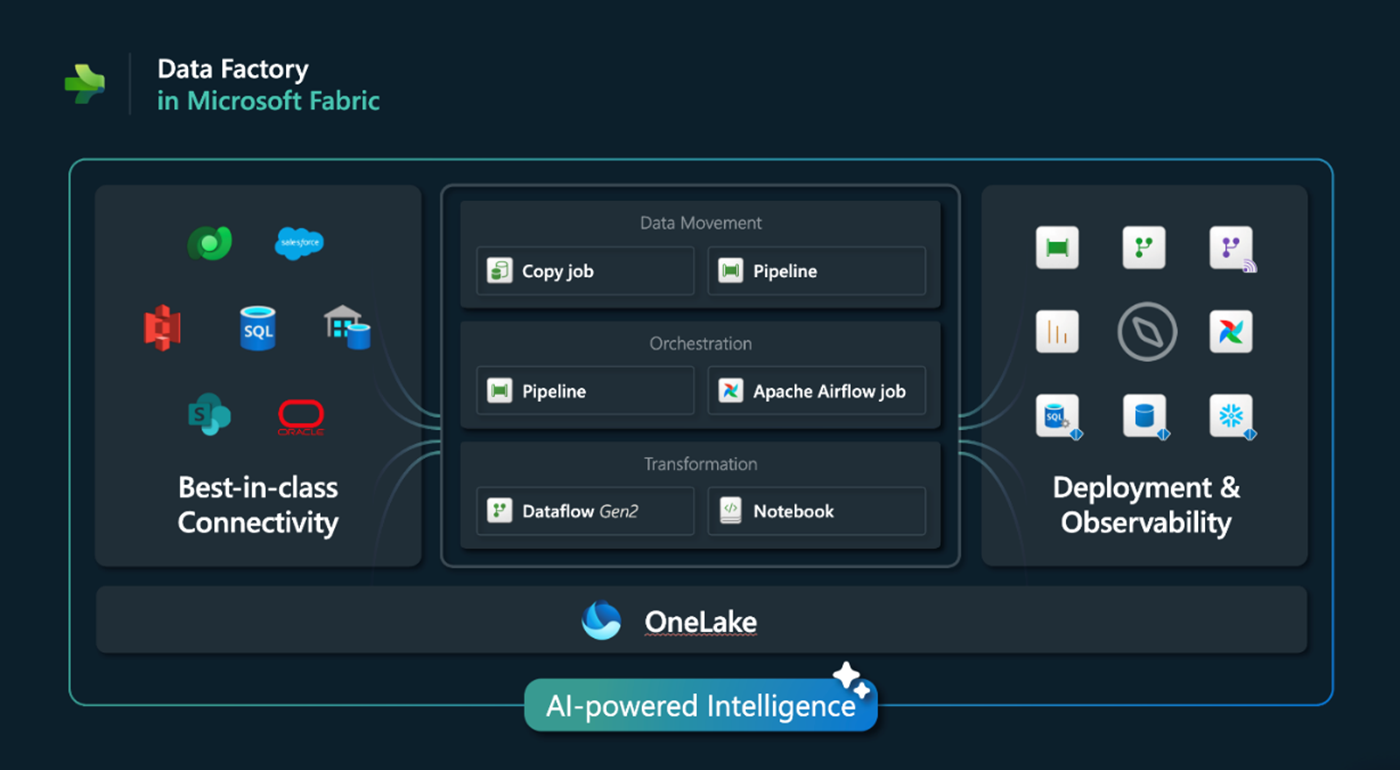
Microsoft Fabric introduces a different approach with Fabric Data Factory, a cloud-scale, fully managed data integration experience built on top of the unified Fabric platform. As the next evolution of Azure Data Factory, Fabric Data Factory offers more than 170 connectors, AI-assisted transformations, hybrid connectivity, and seamless integration with OneLake, making it suitable for modern cloud-first analytics and distributed architectures.
Rather than relying on a single on-premises integration engine, organizations now align workloads to cloud-native services that scale elastically, integrate across multicloud environments, and unify data ingestion with analytics and AI capabilities.
Key Differences Between SSIS and Fabric Data Factory
Read More
Overview
For many years, organizations commonly relied on on‑premises SQL Server as their enterprise data warehouse. While this approach made sense when cloud platforms were immature, it is no longer necessary, or efficient, in modern analytics architectures. Microsoft Fabric fundamentally changes this model by providing purpose-built, cloud-native analytical engines that eliminate the need to manage traditional data warehouse infrastructure.
Within Fabric, SQL Database and Data Warehouse serve different but complementary roles. Understanding when to use each is critical to building a scalable, governed, and future-proof data platform.
Instead of lifting and shifting legacy SQL Server workloads into the cloud, organizations can now adopt services designed specifically for analytical patterns, elasticity, and tight integration with the broader Fabric ecosystem.
The Shift Away from On-Prem SQL Server as a Data Warehouse
Read MoreOverview
Organizations often rush to ingest data without considering the bigger picture. How that data will be governed, secured, and integrated across the enterprise. This approach leads to fragmented environments, compliance risks, and operational inefficiencies. A data landing zone solves this by providing a structured, strategic foundation for your entire data architecture.
A landing zone is not just a storage bucket or a raw data layer. It is a comprehensive framework that defines governance, networking, security, and operational standards before any data enters your environment.
What Is a Data Landing Zone?
Read More
Overview
Modernizing a data pipeline isn’t just about adopting the latest technology, it’s about choosing the right foundation for your data. File formats play a critical role in performance, scalability, and governance. Two widely used formats in modern data lakes are Parquet and Delta. While Parquet is a columnar storage format optimized for analytics, Delta builds on Parquet by adding transactional consistency and metadata management. Understanding how they work together and when to use each is key to designing a future-ready architecture.
Key Considerations: Parquet vs Delta
Read More