
banner-why-daymark.jpg

Cole Tramp's Microsoft Insights

Microsoft Experiences from the Front Line

Delta vs Parquet: How They Work Together in Modern Data Architectures

Overview

Modernizing a data pipeline isn’t just about adopting the latest technology, it’s about choosing the right foundation for your data. File formats play a critical role in performance, scalability, and governance. Two widely used formats in modern data lakes are Parquet and Delta. While Parquet is a columnar storage format optimized for analytics, Delta builds on Parquet by adding transactional consistency and metadata management. Understanding how they work together and when to use each is key to designing a future-ready architecture.

Key Considerations: Parquet vs Delta

Read More
Dec 29, 2025 9:49:03 AM
Share:   

Getting Back to the Basics: Batch vs Streaming (Real-Time)


Overview

In today’s data-driven world, it’s easy to get caught up in advanced architectures and cutting-edge tools. But before diving into complex solutions, understanding the fundamentals is critical. One of the most important distinctions in data processing is Batch vs Streaming (Real-Time). These two paradigms define how data moves, how it’s processed, and ultimately how insights are delivered.

Batch processing has been the backbone of analytics for decades, enabling organizations to process large volumes of data at scheduled intervals. Streaming, on the other hand, focuses on processing data as it arrives, delivering insights in real time. Both approaches have their place, and knowing when to use each is essential for building efficient, cost-effective, and scalable solutions.

In this article, we’ll break down what batch and streaming mean, how they work, and why understanding these basics is the foundation for any modern data strategy.

How It Works: Batch vs Streaming

Read More
Dec 15, 2025 7:30:00 AM
Share:   

Azure Stream Analytics vs. Microsoft Fabric Eventstreams

Overview

Real-time data processing is no longer optional; it’s essential for businesses that want to act on insights instantly. Microsoft offers two powerful solutions for streaming analytics: Azure Stream Analytics (ASA) and Microsoft Fabric Eventstreams. Both enable organizations to capture, process, and analyze data as it arrives, but they take different approaches to solving the same challenge.

Azure Stream Analytics has been a trusted platform for years, delivering robust, developer-focused capabilities for complex event processing. Meanwhile, Fabric Eventstreams introduces a modern, SaaS-based experience that simplifies real-time data integration and analytics for everyone, not just developers. This shift signals where Microsoft is heading: toward a unified, accessible, and future-ready data ecosystem.

In this article, we’ll break down how each solution works, their key differences, and why Fabric Eventstreams is positioned as the future of real-time analytics.


How It Works: Azure Stream Analytics and Fabric Eventstreams

Read More
Dec 8, 2025 7:00:00 AM
Share:   

From On-Prem to Cloud: Simplifying Your Data Lakehouse Connection

Overview

Moving to a cloud data lakehouse can feel like a big leap, especially if your data still lives on-premises. The good news? Connecting your existing systems to modern platforms like Microsoft Fabric or Azure Synapse Analytics is easier than you might think. Both solutions are designed to bridge the gap between on-prem and cloud seamlessly, ensuring your data flows securely and efficiently without disrupting your operations.

In this article, we’ll break down how these connections work, why they matter, and the benefits you’ll gain by making the move.

How It Works: Microsoft Fabric and Azure Synapse

Read More
Dec 1, 2025 10:21:37 AM
Share:   

Microsoft IQ:  The Rise of Enterprise Intelligence Layers

Overview

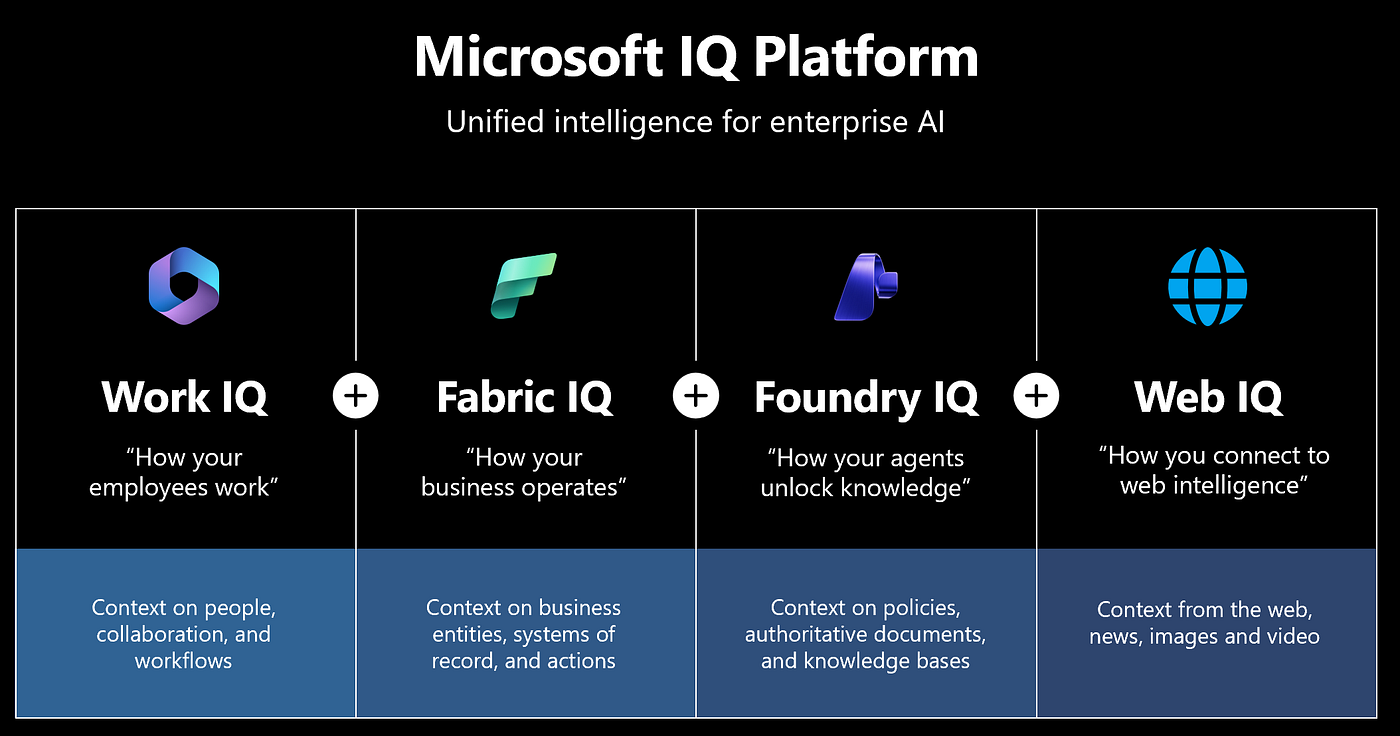
At Microsoft Ignite last week the company unveiled a bold vision for enterprise AI: moving beyond isolated copilots and chatbots toward a unified, agentic architecture. Central to this strategy are three interconnected intelligence layers: Work IQ, Fabric IQ, and Foundry IQ, designed to make AI agents context-aware, business-savvy, and governable at scale. These layers form the backbone of Microsoft’s approach to creating “Frontier Firms,” organizations that embed AI into every workflow while maintaining security and compliance.

The challenge Microsoft aims to solve is clear: large language models alone aren’t enough. Enterprises need systems that understand how work happens, interpret business meaning, and retrieve knowledge safely. Work IQ, Fabric IQ, and Foundry IQ deliver exactly that.

Read More
Nov 24, 2025 8:00:03 AM
Share:   

Copilot Studio in GCC High: Licensing, Setup, and Best Practices

Overview

Microsoft Copilot Studio enables organizations to build conversational AI agents that integrate with Microsoft 365 and external data sources. For U.S. government customers operating in the GCC High environment, Copilot Studio offers a similar licensing model as the commercial cloud. However, setup and integration differ due to compliance and security requirements.

This article outlines how to get started with Copilot Studio in GCC High, including licensing options, deployment architecture, authentication setup, and best practices for scalability.

Licensing: Packs vs. Pay-As-You-Go

Read More
Nov 3, 2025 8:15:00 AM
Share:   

Choosing the Best AI Model for Your Needs: A Strategic Guide

Overview

In today’s rapidly evolving AI landscape, selecting the right model for your application is both a technical and strategic decision. Whether you're building a custom copilot, deploying an agent, or enhancing enterprise workflows, the model you choose will directly impact performance, cost, and user experience. This article walks through a structured approach to model selection, starting with your goals, evaluating the need for multimodality, and leveraging benchmark data from Azure AI Foundry to make informed decisions.

Start with Your Objective

Read More
Oct 20, 2025 9:00:01 AM
Share:   

Azure AI Foundry: Where Brains Meet Bytes

Overview

Welcome to Azure AI Foundry, where artificial intelligence doesn’t just live, it thrives, flexes, and occasionally shows off. If you’ve ever wanted to build apps that talk, see, read, translate, and even judge your content choices, this is your playground. Azure AI Foundry is Microsoft’s curated suite of AI services designed to supercharge your applications with intelligence that is as scalable as it is sophisticated.

Whether you're building a chatbot that flirts with sarcasm or a vision model that spots a cat in a haystack, Azure AI Foundry has the tools to make it happen. It is cloud-native, enterprise-ready, and developer-approved.

The AI Dream Team: Services in Azure AI Foundry

Here’s the lineup of services that make Azure AI Foundry the T-Swift of cloud AI platforms:

Read More
Oct 13, 2025 8:53:53 AM
Share:   

Effortless Data Sync: Change Data Capture in Copy Job for Fabric Pipelines

Overview

Let’s face it. Nobody wakes up excited to manually track data changes across systems. That’s why Microsoft Fabric’s Data Factory has introduced a new best friend for data engineers: Change Data Capture (CDC) in Copy Job (Preview). It’s like having a super-efficient intern who never sleeps, never complains, and always knows exactly which rows were inserted, updated, or deleted.

This feature is designed to keep your destination data fresh and synchronized with minimal effort. Whether you're wrangling Azure SQL DB, SQL Server, or Fabric Lakehouse tables, CDC in Copy Job helps you move data smarter, not harder.

What Is CDC in Copy Job?

Read More
Oct 6, 2025 8:00:01 AM
Share:   

Understanding the Differences: Copilot, Copilot Studio, and Azure AI Foundry

Overview

As AI becomes increasingly embedded in the modern workplace, Microsoft has introduced a suite of tools designed to empower users at every level of technical expertise. Among these are Copilot, Copilot Studio, and Azure AI Foundry. Each serves a distinct purpose in the AI development and deployment lifecycle. Understanding the differences between these tools is essential for organizations looking to harness AI effectively and strategically.

Copilot (M365): Built-In Intelligence for Everyday Users

Read More
Sep 29, 2025 8:15:00 AM
Share: