
banner-why-daymark.jpg

Cole Tramp's Microsoft Insights

Microsoft Experiences from the Front Line

Azure Content Understanding: Unlocking Value from Unstructured Content at Scale

Overview

Most organizations are rich in content but poor in usable insight. Documents, PDFs, images, videos, and audio files hold critical business information, yet much of it is locked away in formats that are difficult to automate, analyze, or govern. This creates operational drag, manual review cycles, and increased costs.

Azure Content Understanding is Microsoft’s AI service designed to change that. It helps organizations consistently analyze and understand unstructured content and turn it into structured, reliable, and reusable information. Instead of fragmented tools and manual effort, Content Understanding provides a unified way to extract meaning from content with accuracy, confidence scores, and governance built in.

For technology leaders, the value is not just AI capabilities, but faster time to value, reduced operational cost, and greater confidence in automation and AI-driven decisions.

Why Use Azure Content Understanding

Read More
Apr 20, 2026 7:15:00 AM
Share:   

Fabric Data Agent vs Fabric Operations Agent: Understanding the Difference


Overview

Microsoft Fabric continues to evolve beyond a unified analytics platform and into an agent-driven system that actively helps users understand data and operate systems. Two of the most important building blocks of this direction are Data Agents and Operations Agents. While both leverage AI, they serve very different purposes. One focuses on understanding data, and the other focuses on acting on real-time conditions. Together, they represent Microsoft’s shift toward embedding intelligence directly into analytics and operations rather than layering it on afterward.

What Data Agents Are Good At

Read More
Apr 13, 2026 10:29:50 AM
Share:   

Microsoft Fabric Item Recovery (Soft Delete): What You Need to Know

Overview

As Microsoft Fabric environments mature and become more collaborative, the risk of accidental deletion increases. A data engineer cleaning up a workspace, an analyst removing unused assets, or a contributor misunderstanding dependencies can easily delete the wrong item. Until recently, that deletion was permanent.

Microsoft Fabric now introduces item-level recovery through soft delete, providing a critical safety net for supported Fabric items. This capability complements existing workspace retention and adds fine-grained protection at the item level.

Item recovery allows deleted items to be retained for a configurable period, during which authorized users can restore them or permanently delete them. This feature is currently available in preview and must be explicitly enabled at the tenant level.

Prerequisites and Configuration

Read More
Apr 6, 2026 7:30:00 AM
Share:   

Microsoft Fabric Database Hub: A Major Step Forward in Database Management

Overview

At FabCon 2026, Microsoft took another important step toward reshaping how organizations manage databases by announcing the Database Hub in Microsoft Fabric. While the Database Hub is still in early access and not yet generally available, it represents a meaningful shift in how Microsoft is thinking about database management at scale.

For years, database teams have operated across fragmented tools, portals, and management experiences depending on whether the database lived on‑premises, in Azure PaaS, or in a SaaS environment. As data estates grow and AI workloads place greater pressure on operational data, that fragmentation becomes a real problem. The Database Hub is Microsoft’s answer to this challenge, providing a unified control plane for managing databases across the enterprise from within Fabric.

Anyone running SQL Server today, whether on‑premises or in Azure, should be paying close attention. This is not just another management experience. It is a signal of where Microsoft is taking databases as part of a single, converged data platform.

What the Database Hub Is

Read More
Mar 30, 2026 7:30:00 AM
Share:   

Fabric Security: Control Plane vs Data Plane

Overview

Microsoft Fabric security is built on two distinct layers that are often confused but serve very different purposes:

    • Control plane access determines what you can do in Fabric, such as creating items, managing workspaces, and sharing content.
    • Data plane access determines what data you can actually see or interact with inside OneLake.

For much of Fabric’s early life, workspace roles were used as the primary security boundary. That works for collaboration, but it becomes problematic as platforms scale and data products need stronger governance.

This is where OneLake security comes in. It introduces native, fine-grained security directly at the storage layer, allowing organizations to separate operational permissions from data access. At FabCon, Microsoft announced that OneLake security is going GA in April 2026, signaling that this model is ready to become the standard for enterprise Fabric deployments.

Control Plane Access: Workspace Roles

Read More
Mar 23, 2026 7:30:00 AM
Share:   

Back at the Microsoft Fabric Community Conference!

Daymark Solutions is at FabCon for a second year in a row!

There’s something energizing about being back at the Microsoft Fabric Community Conference. After attending last year, it’s great to once again be surrounded by people who are genuinely excited about Fabric, from data engineers and analysts to architects and partners building real world solutions every day.

Read More
Mar 17, 2026 3:29:20 PM
Share:   

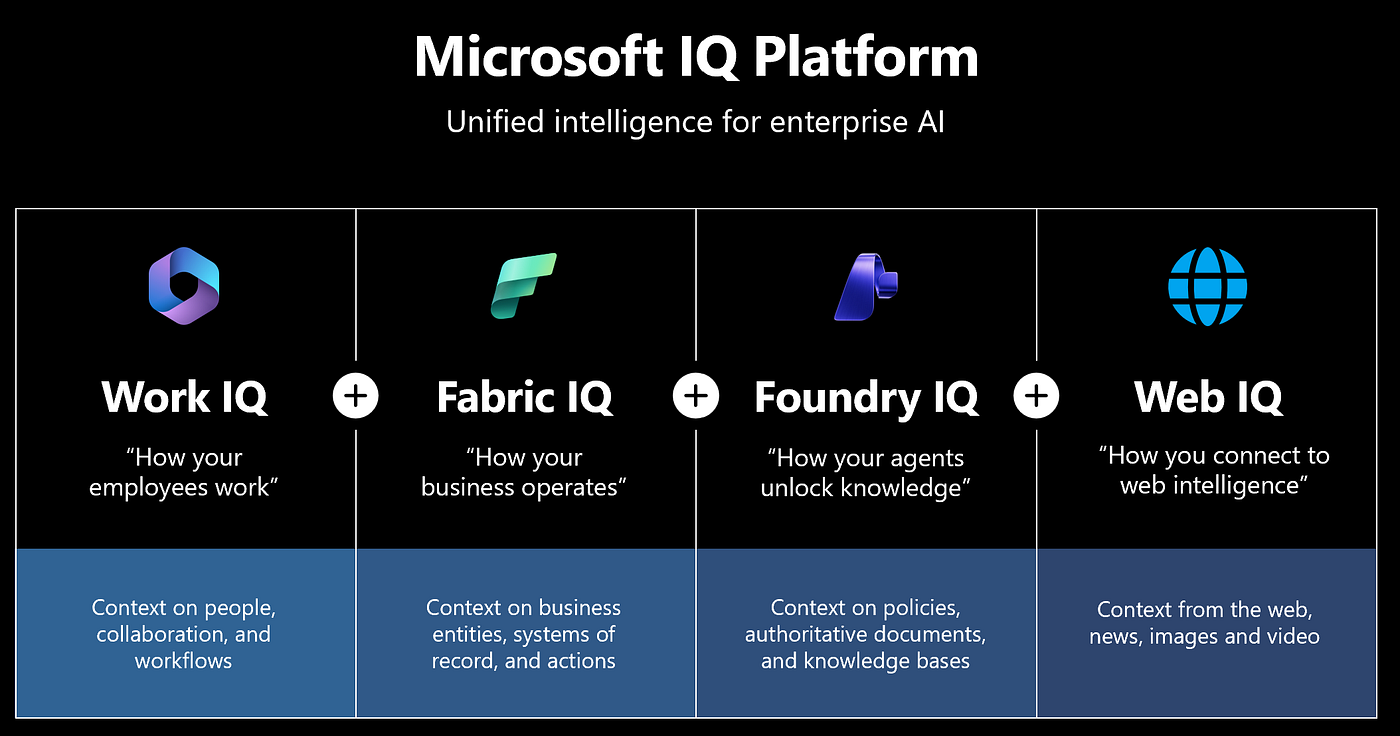
AI Ready Enterprise Intelligence with Fabric IQ and Fabric Ontology


Read More
Mar 16, 2026 7:30:00 AM
Share:   

Fabric Notebooks vs Stored Procedures in Microsoft Fabric

Overview

Microsoft Fabric provides multiple ways to implement transformation logic and operationalize it within Fabric Data Factory pipelines. Two of the most common approaches are Fabric notebooks and SQL stored procedures.

Both are first class tools in Fabric and both can be orchestrated through Data Factory pipelines. The difference is not about which one is better. It is about how the processing is executed, where the logic lives, and what development style best fits the workload.

Notebooks are built on Apache Spark and are designed for distributed, code driven data engineering and analytics workflows. Stored procedures run directly in the SQL engine and are optimized for relational, database centric operations. In real world Fabric architectures, it is common and often recommended to use both together.

Understanding the strengths of each helps teams design pipelines that are scalable, maintainable, and aligned with how their data is structured and governed.

Fabric Notebooks

Read More
Mar 9, 2026 7:14:59 AM
Share:   

Microsoft Fabric Gateways: On‑Prem, VNet, and Streaming

Overview

A data gateway in Microsoft Fabric and Power BI is the secure connectivity layer that allows cloud services to access data sources that aren’t publicly reachable. This includes on-premises systems, Azure resources locked behind private endpoints, and streaming platforms running inside private networks.

Gateways are critical because most real-world architectures are hybrid. Even as organizations adopt Fabric, they often need to integrate with legacy systems, tightly secured Azure services, or real-time platforms that cannot be exposed to the public internet. Gateways make this possible without compromising security or network boundaries.

Microsoft Fabric currently supports three gateway types, each optimized for a different scenario:

    • On-premises data gateway
    • Virtual network data gateway
    • Streaming virtual network data gateway

Understanding when to use each one helps avoid unnecessary complexity and ensures the right balance of security, performance, and manageability.

What a Data Gateway Does in Fabric and Power BI

Read More
Mar 2, 2026 7:00:00 AM
Share:   

Azure Data Lake vs Microsoft Fabric Lakehouse: From Data Swamp to a Managed Data Platform

Overview

Organizations building modern analytics platforms on Azure often start with Azure Data Lake Storage Gen2 as their foundational storage layer. Azure Data Lake is highly scalable, cost effective, and flexible, making it an attractive landing zone for raw data of all types. However, without strong governance, modeling, and processing layers, many data lakes gradually devolve into what is commonly referred to as a data swamp.

Microsoft Fabric Lakehouse was introduced to address these challenges by combining the openness of a data lake with the structure, governance, and usability of a warehouse. Unlike a traditional data lake, Fabric Lakehouse is delivered as a fully managed SaaS experience that tightly integrates storage, compute, governance, security, and analytics into a single platform.

Understanding the differences between Azure Data Lake and Fabric Lakehouse is critical when designing scalable, maintainable, and business-ready data architectures.

Azure Data Lake Storage Gen2

Read More
Feb 23, 2026 7:15:00 AM
Share: