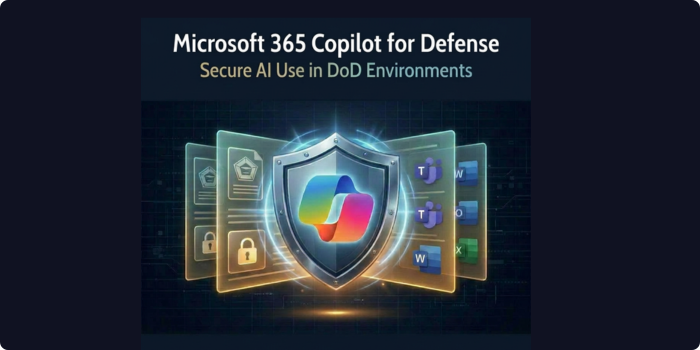

Defense contractors handling sensitive government data face a critical infrastructure decision that directly affects their eligibility for DoD contracts. Microsoft GCC High has emerged as the de facto standard cloud environment for organizations in the Defense Industrial Base working with Controlled Unclassified Information (CUI) and export-controlled data. If you're evaluating cloud platforms for CMMC compliance or wondering whether your current Microsoft 365 setup meets DoD requirements, understanding the distinction between GCC High and other Microsoft cloud offerings isn't optional-it's essential to your contract eligibility.
Comparing Common Approaches to GCC High Migration
Introduction
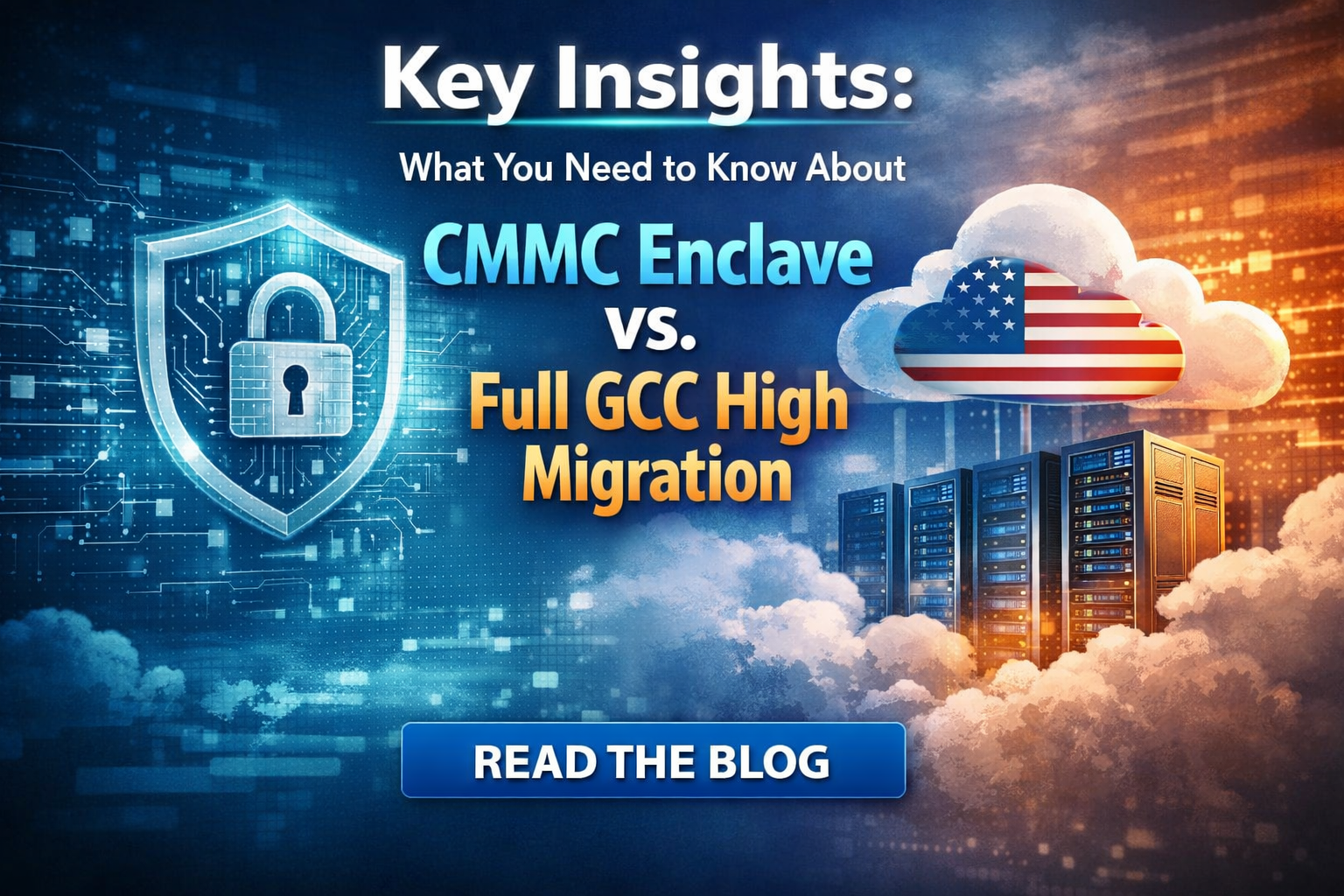
Organizations that work with U.S. government contracts or handle sensitive regulated data often face tough decisions about their cloud strategy. Two common approaches for meeting requirements are migrating all users to a dedicated Microsoft GCC High tenant or creating a secure enclave and migrating only select users. This blog post explores the differences between these two strategies, highlighting the pros and cons of each so you can make an informed decision for your organization.
What Is GCC High?
Microsoft GCC High (Government Community Cloud High) is a dedicated cloud environment designed specifically for U.S. government agencies and contractors that must comply with strict regulatory standards, such as FedRAMP High, ITAR, and DFARS when handling controlled unclassified information (CUI). GCC High provides enhanced controls, data residency in the continental United States, and a dedicated infrastructure that separates government data from commercial environments.
What Is a Secure Enclave?
Read MoreMicrosoft has introduced Microsoft 365 Business Premium for GCC High, a tailored solution for small and mid-sized organizations in the Defense Industrial Base (DIB). This offering provides a cost-effective path to compliance with CMMC 2.0 and NIST 800-171, while maintaining the strict security and sovereignty standards of the GCC High environment.
✅ What Does GCC High Business Premium Include?
The new Business Premium for GCC High license mirrors much of the functionality of the commercial Business Premium suite but operates within Microsoft’s U.S. Government Community Cloud High (GCC-High) environment. Key features include:
Read MoreThe Cybersecurity Maturity Model Certification (CMMC) is on track to become a core requirement for defense contractors. However, before CMMC can be included in Department of Defense (DoD) contracts, a key regulation must take effect: Title 48 of the Code of Federal Regulations (48 CFR).
If your organization does business with the DoD—or hopes to—you need to understand this rule and how it will impact your eligibility to win and maintain government contracts.
What Is 48 CFR?
48 CFR is part of the Federal Acquisition Regulation (FAR) System, which governs how the federal government procures goods and services. Within this system, the Defense Federal Acquisition Regulation Supplement (DFARS) adds DoD-specific rules. The 48 CFR rule specifically integrates CMMC 2.0 into the DFARS. In short, this rule establishes cybersecurity requirements as a contractual obligation—not just policy guidance.
How 48 CFR Connects to CMMC 2.0
Read MoreOn October 15, 2024, the final rule for the Cybersecurity Maturity Model Certification (CMMC) program was officially published. This rule, codified as 32 CFR, becomes effective on December 16, 2024. The CMMC journey began in 2019 with DFARS Case 2019-D041, and after four years of development, the rule is now finalized. Let’s take a look at the history of the CMMC timeline, what's to come, and how organizations can prepare for what is next.
CMMC Rulemaking Timeline
The rulemaking process illustrated in the graphic below shows a high-level workflow from the Government Accountability Office (GAO).
Figure 1: GAO Federal Rulemaking
Read MoreProtecting sensitive and classified information when working for the Federal Government requires constant vigilance. When the government issues a contract, it must specify to the performing contractor when covered defense information (CDI) or controlled unclassified information (CDI) will be generated under the contract. Many prime contractors “flowdown” every FAR and DFARS clause to subcontractors and vendors without considering if that subcontractor or vendor will be processing, storing, or transmitting CDI. Anticipating where CDI may reside once awarded a contract can be a challenge. Here is guidance on ways CDI can flowdown to subcontractors and the defense industrial base (DIB), and steps those organizations should take before signing an agreement.
An Introduction to DFARS
Read More
Adoption of Microsoft’s 365 Government Community Cloud (GCC) High sovereign cloud solution is on the rise as organizations in the Defense Industrial Base (DIB) work to ensure compliance with the stringent regulations related to the Cyber Security Maturity Model (CMMC) v2.0 and current NIST 800-171 framework. GCC High is an excellent option for DIB contractors who handle Controlled Unclassified Information (CUI) and International Traffic in Arms Regulation (ITAR) data in their cloud or hybrid environments.
Microsoft continuously improves and enhances features and capabilities to the GCC High platform. Just like updates to Microsoft 365, it can be hard to keep up with them all. Daymark’s Government Community Services Team has carefully selected updates we believe are worth paying attention to with our own GCC High Roadmap.
Read MorePreparing for a Cybersecurity Maturity Model Certification (CMMC) 2.0 assessment can be completely overwhelming. Here’s the good news: If you’re NIST 800-171 compliant, you’re more than halfway there. If you’re not, you’ve got some work to do for sure, but it’s not as complicated or daunting as you may fear.
NIST 800-171
Read MoreThe Cybersecurity Maturity Model Certification (CMMC) 2.0 is the DoD framework designed to enhance cybersecurity and protect against compromise of sensitive defense information on contractors’ systems. Some defense industrial base organizations (DIB) have mistakenly taken a “wait and see” attitude about preparing for CMMC compliance, believing that they will wait until the government finalizes 2.0 requirements. While holding off on the time, resources and budget to prepare for CMMC may seem prudent (and frankly easier to delay), the risks of waiting could have a significantly negative impact on contractors’ revenue. Here’s why:
Read MoreIf your organization has been working towards NIST 800-171 and is now on the journey to achieve CMMC 2.0 (the Cybersecurity Maturity Model Certification) it can be difficult to understand what you’ve already achieved and what’s left to do. Both standards are intended to reduce threats and strengthen cybersecurity for sensitive government data. Here’s some details on how they relate to each other and what’s involved to take the next steps toward CMMC compliance.
Read MoreSubscribe to Daymark Insights
Latest Posts
Browse by Tag
- Cloud (70)
- Microsoft (48)
- Security (47)
- Azure (36)
- Data Protection (32)
- Partners (32)
- Data Center (28)
- Backup (26)
- Compliance (26)
- Daymark News (23)
- Data Governance (20)
- Storage (20)
- CMMC (19)
- Veritas (18)
- Virtualization (18)
- Cybersecurity (17)
- Cloud Backup (14)
- Disaster Recovery (14)
- Government Cloud (14)
- Managed Services (13)
- GCC High (11)
- AI (9)
- Featured Gov (9)
- Industry Expertise (9)
- Networking (6)
- Hybrid Cloud (5)
- NIST SP 800-171 (4)
- Reporting (3)
- Services (3)
- Cloud Security (2)
- Copilot (2)
- GDPR (2)
- Pure Storage (2)
- Mobile (1)